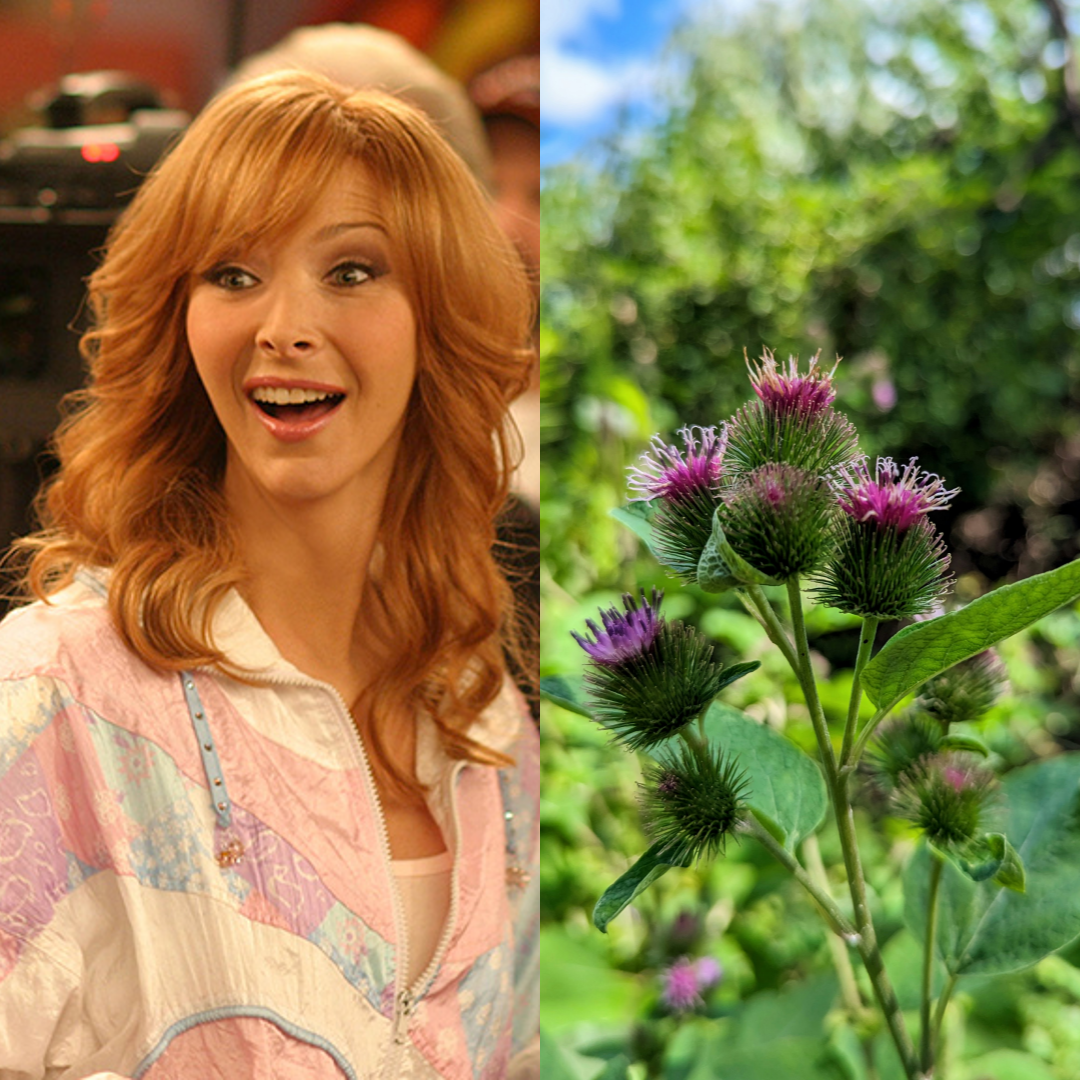
There’s a scene in season 2 of The Comeback when Valerie and Mark’s marriage hits a really hard, really painful crossroad. Val, the sitcom actress, is angry that he’s not supporting her during a critical time after all the years she’s been there for him, even those moments he hasn’t noticed. Her lawyer husband, Mark, is tired of her sacrificing herself, their marriage and their home for Hollywood fame.
Thing is, they’re both right. Mark is ungrateful and Val self-involved. We knew his anger was bubbling in him. What we did not foresee is her getting this pissed. This is not the Val we’re used to.
When The Comeback premiered on HBO in June 2005, we were introduced to Valerie Cherish, the smiling, agreeable, people-pleasing B-list (C-list?) sitcom actress who’s trying to reclaim fame after her first TV hit, I’m It! Now, in 2005, she’s auditioning for Room and Bored, a prototypical early 2000s sitcom about hot 20-somethings. She’d be playing Aunt Sassy, a bit of a spinster loser, a nod to what Hollywood thinks of women in their 40s and 50s. And the studio deal is: the actor who gets the role of Aunt Sassy is also agreeing to a companion reality series.
Val gets the role, partly because she’s one of the few actors willing to do reality.

Valerie is painfully desperate to get famous again. She also has, as The New Yorker puts it, "a bottomless desperation to please." For the young cast of Room and Bored, she’s the mentor they never asked for. For the writers of Room and Bored, she’s the pest clamoring for more screentime.
In real life, Val has no filter and no self-awareness. In reel life—on her reality show within the show—she is too filtered and too self-aware. Val wants her comeback to be perfect, wants validation so badly so she'll say yes to anything, no matter how much it's going to inconvenience or hurt her.
When the Room and Bored writer Paulie G. is an asshole to her, she takes it. When she drops by the writer’s room at midnight to bring them sweet treats and she sees them simulating sex with someone dressed as her, she says the writers are just “blowing off steam.” When Paulie G. convinces her to do a pratfall in a Room and Bored scene, she does it despite her scoliosis.

In The Comeback season 2, which debuted nine years later in a back-by-cult-demand kinda way, Paulie G. is writing and directing a dramedy for HBO called Seeing Red about a heroin-addicted TV writer working on a cheesy sitcom and plagued by a washed-up red-headed sitcom actress. Hmm.
Val gets wind of Seeing Red, auditions, is very good, and gets the part of “Mallory Church,” playing opposite Seth Rogen who is playing himself in The Comeback and playing Mitch, the Paulie G. character in the show-within-the-show Seeing Red. Are you confused yet? (Oh, and the long-awaited third and final season of The Comeback premiered yesterday, March 22, on HBO.)
But let's go back to season 2. It starts with Val filming her own reality pilot. This is peak Real Housewives era, and she wants to get a tape to Andy Cohen. (Andy makes a perfect appearance in the premiere.) Once again, Val ingratiates herself with everyone to a dizzying, insufferable degree. When Seth Rogen offhandedly mentions ham, she literally buys him a whole ham.
Val can’t read a room. But Val is also kind, generous and resilient. And because Lisa Kudrow and The Comeback writers are so brilliant, we can’t help but love Val and be fiercely protective of her. She just wants to act, get a magazine cover and book a spot on Jay Leno. Who amongst us?? But in her relentless pursuit of Hollywood, Val is constantly humiliated and bullied. That’s why the few times Val does unleash her anger in season 2 (finally), we cheer.
Like that time she punches Paulie G. in season one. Or in that season 2 fight with Mark. Or even in her line-reads of Seeing Red, where Mallory Church (the Valerie Cherish proxy) mercilessly tears down Mitch (the Paulie G. proxy).
Why does it feel so good to see Val get angry? It’s because Val is a “yes” woman, and in those instances where she says “no,” it feels like a small win against a systemic issue. “Anger is usually about saying ‘no’ in a world where women are conditioned to say almost anything but ‘no,’ says Soraya Chemaly, author of the book Rage Becomes Her.
It’s not surprising when a man gets angry. In fact, anger from a white cis male is normalized, socially accepted, and a symbol of strength and power. I mean, Paulie G. created a show literally called "Seeing Red" and got it greenlit by HBO. And despite how cruel Paulie G. is to Val, despite how destructive his anger is for everyone working on Room and Bored, no one says a word. In fact, everyone falls in line. On Conan O'Brien's podcast, Lisa Kudrow explains that that character is hardly a stretch of the imagination. Everyone in The Comeback writer's room knew a guy like that. Art just imitating life.
Women, though, are taught to be good girls. Smile when we are literally just walking down the street. Stop getting emotional. Don't be so irrational. Is it that time of the month? When we're angry, it gets its own label: “feminine rage.” The Cut put together a listicle of 25 celebrity women talking about anger. Are we polling men, too? We have an entire genre of movies dedicated to so-called feminine rage (see: Steel Magnolias or Waiting to Exhale).
“When you say, ‘I’m angry because my needs weren’t met’ or ‘I’m angry because my boundary was crossed,’ then that’s deemed too much,” says holistic health coach Linda Villines. “You’re deemed selfish, inappropriate, emotional. And I think that's because personal anger exposes vulnerability. It reveals that you have needs, that you can be hurt, that you do want love, that you do feel grief. And culturally, vulnerability has been stigmatized as weakness, as a flaw.”
There's also the separate but related topic I don't have the lived experience to speak on, but I can't not mention it: Being angry is a privilege not everyone is given. People in BIPOC communities, particularly black men and women, are often forced to hide their anger lest they want to be labeled, judged, dismissed, accused or all of the above. It's bullshit and it's racist. And for anyone who suppresses rage, it can damage from the inside out, too.
“Anger is like water,” Chemaly says. “No matter how hard a person tries to dam, divert or deny it, it will find a way, usually along the path of least resistance…women often ‘feel’ their anger in their bodies. Unprocessed anger threads itself through our appearances, bodies, eating habits and relationships, fueling low self-esteem, anxiety, depression, self-harm and actual physical illness.”
Anger, stress and grief don't cause disease per se. But those emotions can activate what’s been lying dormant. For example, women account for 80% of autoimmune disorders. The science says that autoimmune issues are caused by variations in sex chromosomes and hormonal changes. But poor sleep, diet, stress and other psychosocial factors can be triggers. Or take a March 2022 study that found that women of color who strongly agreed with statements like “I rarely express my anger to those close to me” were 70% more likely to experience clogged carotid arteries, which increases the chances of stroke.
Not that getting angry is always a good thing. It can increase blood pressure and the risk of heart disease. But what if anger in women was a healthy, normal, accepted reaction? Something that gives a woman the chance to make a needed change—in a relationship, family, community, business partnership?
“A negative use of rage is to destructively concentrate in one tiny spot until, like acid creating an ulcer, it destructively burns a black hole right through all the delicate layers of the psyche,” says Dr. Clarissa Pinkola Estés in her seminal 1992 book Women Who Run With the Wolves. “[But] our rage can, for a time, become our teacher…something to personify, learn from, deal with internally, then shape into something used in the world as a result, or something we let go back down to dust. It is a substance waiting for our transformative efforts.”
The power to say “I can do something with this” or “get this out of my body” is something our livers do every day. Our largest organ upcycles what our body needs and gets rid of what it doesn’t. And it’s no coincidence that in Traditional Chinese Medicine, anger is closely associated with the liver. Release that which does not serve, ya know?
In a nutshell, the liver:
- Stores, regulates and filters blood
- Stores vitamins and iron
- Helps metabolize proteins
- Secretes bile to help break down fats
- Transforms and eliminates hormones
- Eliminates toxins like pesticides, food additives and alcohol
Our liver is like a marvelous recycling slash waste center. Add in the metaphysical layer that aggravated emotion can aggravate our liver, and it's clear that this organ—the only one in our body that can regenerative itself—is critical to keeping our body in balance.
There are a lot of liver-loving herbs, but burdock root is my favorite, especially in the spring when I'm helping my body wake up from winter.

Arcitcum lappa supports our bodies' natural elimination systems, including the liver, gallbladder, kidneys and digestive tract—a category of herbs called alteratives. The seeds are medicinal—used for sore, swollen throats and fevers and to balance the urinary system—but I love to use the roots and typically buy them dried from natural grocery stores or herbal shops.
Burdock root is a go-to for internal heat. Maybe that "heat" is an anger. Maybe it's rashes, eczema, psoriasis, boils or acne. Maybe it's anger that's contributed to those skin reactions. Either way, that heat often means there's an internal clog, usually in your liver and/or lymphatic system. Your body wants to purge lingering toxins and metabolic waste, and for some of us, skin can look like a big red EXIT sign. Burdock root's slightly cooling energy can help temper that "heat."
And its slightly bitter taste and high inulin content—up to 17% by some estimates—can help our gut. (Inulin is a prebiotic starch that feeds all the “good” bacteria in our digestive system.) If we're dealing with diarrhea, constipation or just overall sluggish digestion, inulin is our friend.
Think of burdock root like a botanical broom, stirring up toxins and punting them into the bloodstream. That’s why sometimes consuming burdock root means more skin flare-ups, headaches and/or fatigue—temporarily! If you pair burdock root with a diuretic, like dandelion leaf and/or root, you have a pro clean-up crew that’s getting your body to eliminate via urine, not skin. One sweeps up the mess, one pushes it out.
It's in the food-is-medicine category, too. In Japan, people thinly slice burdock root, or gobo, soak it in vinegar-water for 15 minutes, then boil in salted water. I sprinkle the dried cut root on my dog’s food to support his sweet little liver. But for myself, I love an earthy, grounding brew of burdock-dandelion tea.
Burdock-Dandelion Tea
- 1 tsp dried burdock root
- 1 tsp dried dandelion root
- 12 ounces water
- ½-1 tsp dried peppermint leaves (optional, to taste)
Combine herbs and water in a small pot, cover and bring everything to a boil. Immediately reduce to a simmer for 15-20 minutes. Take off the heat, add dried peppermint leaves and steep covered for another 10-15 minutes. Strain and sip.
A word from the herbalist: Burdock is generally safe for everyone. But be cautious if you're allergic to the Asteraceae family (e.g. calendula, zinnia). Burdock seeds are contraindicated in pregnancy except during the last trimester. And if you’re not ready for a potential short-term worsening of symptoms (the purge), start with a low dose, if at all.
Through the lens of Native American healing traditions and animal medicine, many herbalists consider burdock to be bear medicine. The plant has fuzzy brown burrs—which inspired the invention of Velcro—and rich, oily, nutrient-dense roots that wake up digestion after a long hibernation.

Our winters aren't usually as dormant as a bear's. No, our Western culture focuses on holiday parties, eating, drinking and a lot of other things that have thrown our bodies out of whack. But nature has the same timeline for us all. The flowers are blooming, seeds are sprouting, the bears are waking up, and so are we. It's a perfect time to recalibrate, hit reset on our digestion and get back to a more balanced routine. There's energy happening. But how do we balance that momentum, those emotions and that fire? Well, we can look to the bear again.
As Dr. Estés says: “Bearish power is the ability to move in cycles, be fully alert, or quiet down into a hibernative sleep that renews one’s energy for the next cycle. The bear image teaches that it is possible to maintain a kind of pressure gauge for one’s emotional life, and most especially that one can be fierce and generous at the same time…one can protect one’s territory, make one’s boundaries clear, shake the sky if need be, yet be available, accessible, engendering all at the same time.”
#bethebear
Angum F, Khan T, Kaler J, Siddiqui L, Hussain A. The Prevalence of Autoimmune Disorders in Women: A Narrative Review. Cureus. 2020 May 13;12(5):e8094. doi: 10.7759/cureus.8094. PMID: 32542149; PMCID: PMC7292717.
Cech, R., & Cech, S. (2016a). Making Plant Medicine. Herbal Reads.
Chemaly, S. (2018). Rage Becomes Her. Atria Books.
Chen, Y., Su, J.-Y., & Yang, C.-Y. (2022). Ultrasound-Assisted Aqueous Extraction of Chlorogenic Acid and Cynarin with the Impact of Inulin from Burdock (Arctium lappa L.) Roots. Antioxidants, 11(7), 1219. https://doi.org/10.3390/antiox11071219
Estés, C. P. (1992). Women Who Run With the Wolves. Balantine Books.
Han, H., Miller, G., & Deville, N. (2003). Ancient Herbs, Modern Medicine: Improving Your Health by Combining Chinese Herbal Medicine and Western Medicine. Bantam Books.
Holmes, P. (1989). The Energetics of Western Herbs: Volume 2: A Materia Medica Integrating Western and Chinese Herbal Therapeutics (Vol. 2). Snow Lotus Press.
Jakubowski KP, Barinas-Mitchell E, Chang YF, Maki PM, Matthews KA, Thurston RC. The Cardiovascular Cost of Silence: Relationships Between Self-silencing and Carotid Atherosclerosis in Midlife Women. Ann Behav Med. 2022 Mar 1;56(3):282-290. doi: 10.1093/abm/kaab046. PMID: 34124743; PMCID: PMC8887577.
Jones, Lucy. A Working Herbal Dispensary. Aeon Books, 30 May 2023.
Nermeen Yosri, Sultan M. Alsharif, Jianbo Xiao, Syed G. Musharraf, Chao Zhao, Aamer Saeed, Ruichang Gao, Noha S. Said, Alessandro Di Minno, Maria Daglia, Zhiming Guo, Shaden A.M. Khalifa, Hesham R. El-Seedi,
Arctium lappa (Burdock): Insights from ethnopharmacology potential, chemical constituents, clinical studies, pharmacological utility and nanomedicine,
Biomedicine & Pharmacotherapy, Volume 158, 2023, 114104, ISSN 0753-3322, https://doi.org/10.1016/j.biopha.2022.114104.
Staicu ML, Cuţov M. Anger and health risk behaviors. J Med Life. 2010 Oct-Dec;3(4):372-5. PMID: 21254733; PMCID: PMC3019061.
Villines, L. (2025, October 17). Why your anger is sacred and what it is trying to tell you (episode 59). https://podcasts.apple.com/us/podcast/why-your-anger-is-sacred-and-what-it-is-trying-to-tell-you/id1746098063?i=1000732266251
Wood, Matthew. The Earthwise Herbal, Volume 1 : A Complete Guide to Old World Medicinal Plants. Berkeley, Calif., North Atlantic Books, 2008.