There was a time in my 20s when I thought hot pink tights and black velvet ankle booties were a good idea. I was on the subway on my way to work and along the way, my boss got on my subway car from her stop. She looked at my outfit and said with love (maybe?), "...well ok!" Her hot take rolled right off me.
In my 30s, I began self-censoring and became less experimental. Being hot pink—both literally and figuratively—felt like too much. Too big, too bold, too out there, too loud. Yes, I owe some of that to my evolving taste, some to cultural shifts (hot pink gave way to millennial pink), and some to my new home of Ojai, where the color palette is earth tones and "communist colors"—as my brother-in-law once called it.
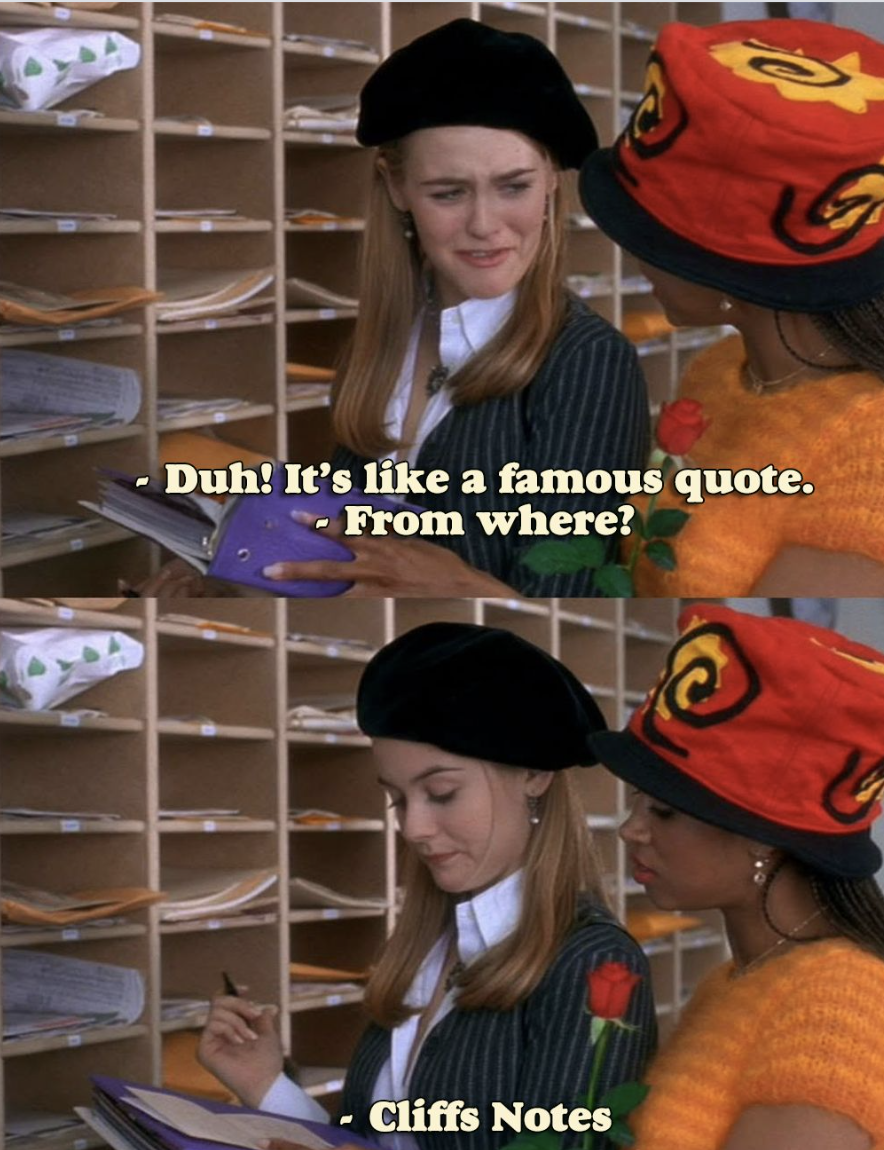
It's not completely random that my hot pink tights memory came back to me last month. Last year I turned 40, and with that entry into a new decade came a resurgence to return to my colorful, fiery self sartorially, verbally, physically. (I am woman, hear me roar? How cliché.) But I am an Aries after all. And this is the year of the Fire Horse after all. I'm currently craving color and dancing and loud music and maximalism and run-on sentences, so it's no surprise I'm craving a rewatch of Romeo + Juliet, too.
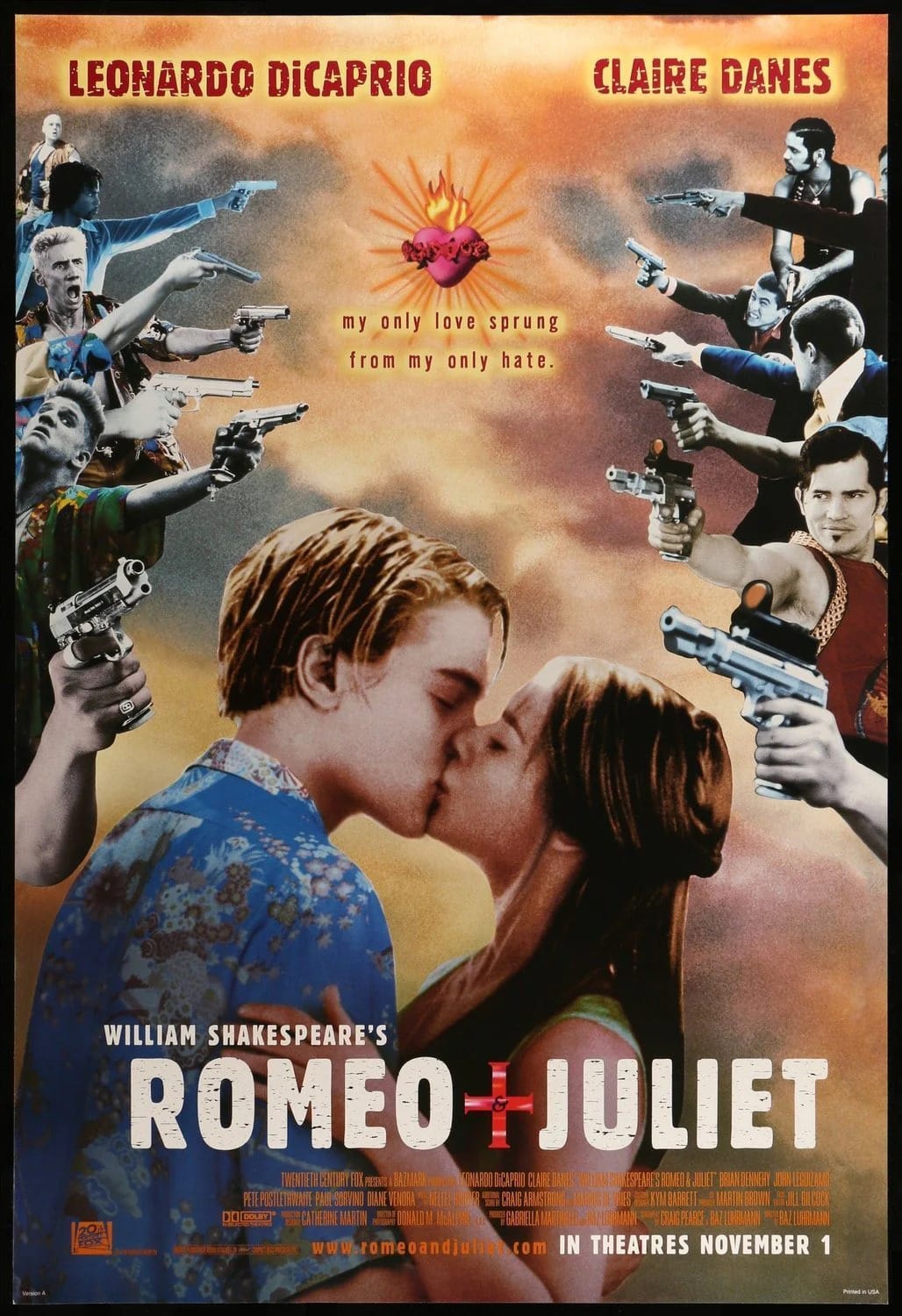
Romeo + Juliet is a perfect example of director Baz Luhrmann's kaleidoscopic style: psychedelic colors, frenetic cuts, extravagant sets, wild costumes and thumping soundtracks. Maybe you've seen his other work—The Great Gatsby, Moulin Rouge!, Elvis. Luhrmann's movies can feel like a chaotic blur, and they're not for everyone. This one certainly wasn't when it premiered in 1996. Critics wrote it off as "punk... [and] a very bad idea," "overwhelmingly of-the-moment" and "the kind of violent swank-trash music video that may make you feel like reaching for the remote control." Well, all right then.
But in the 30 years since its release, many of the naysayers have changed their tune. It dawned on them that maybe Luhrmann's rendition, starring Claire Danes and Leonardo DiCaprio, was less MTV slop and more art in its own right. (Time's film critic Stephanie Zacharek said it herself in this updated review published in 2021: "I Panned Romeo + Juliet in 1996. Now I Think It's One of the Best Shakespeare Adaptations.")
Those early reviews reek of some weird, unflinching commitment to the Bard. Like any adaptation of Shakespeare should but of course look like a production at the Old Globe. I loved Roger Ebert, but he called the movie "confused": "The music is a clue. The soundtrack has rock, Latin and punk music, a children’s choir, and a production number, but the balcony scene and a lot of the later stuff is scored for lush strings (and not scored well, either)."
Dear Mr. Ebert, that's the whole point! Also, that children's choir rendition of Prince's "When Doves Cry" is one of the highlights of the movie! It's a bold, brash retelling that connects to audiences in a new way. Something that challenges our traditional sensibilities and replaces it with fresh visuals and anachronistic details. It's about being transported to a world where Mexico City subs in for Verona and Mercutio is a fabulous black drag queen.
To me, the movie was a revelation, pulsating art. I was 11 at the time it came out—perhaps a little young for some of the themes—but it lit within me this love for music, art, dance and entertainment. So this is what it feels like to go to the movies. This is what joy feels like. This is what makes pink tights with black velvet booties make sense!
OK I do agree with Ebert that most of the actors do not nail the dialogue–the whole movie is spoken in Shakespeare's dialogue as written—but I don't agree with having a problem with it. As Zacharek said in her updated 2021 review: "I recall friends complaining that DiCaprio and Danes had no idea what they were doing, that they had no mastery over the material. But that’s exactly the point: their Romeo + Juliet is one of pure feeling, a flame burning fast and clean."
Burn, baby, burn. That's the anthem of this movie and the anthem of summer, too. Summer is of course the season of heat, but I don't just mean the weather. The vibe is more flamboyant—parties, barbecues, beach outfits, splashy vacations, late dinners, tan lines. The summer season is also when we tend to get more irritable and overstimulated. More stress, poor sleep, mood shifts—it's been scientifically proven.
Summer is inherently "fire" energy, but it's not about extinguishing it. There are so many things about that fire energy to embrace, from connection with friends to warmth on our skin to joy in our souls.

It's about balancing that fire so it doesn't rage out of control. Cooling foods (watermelon, cucumbers, zucchini), cooling exercises (yin yoga) and cooling herbs can help. And for me, nothing represents that balance of summer fire better than chilled hibiscus tea. An explosive burst of color from the outside, a wealth of cool energy on the inside.
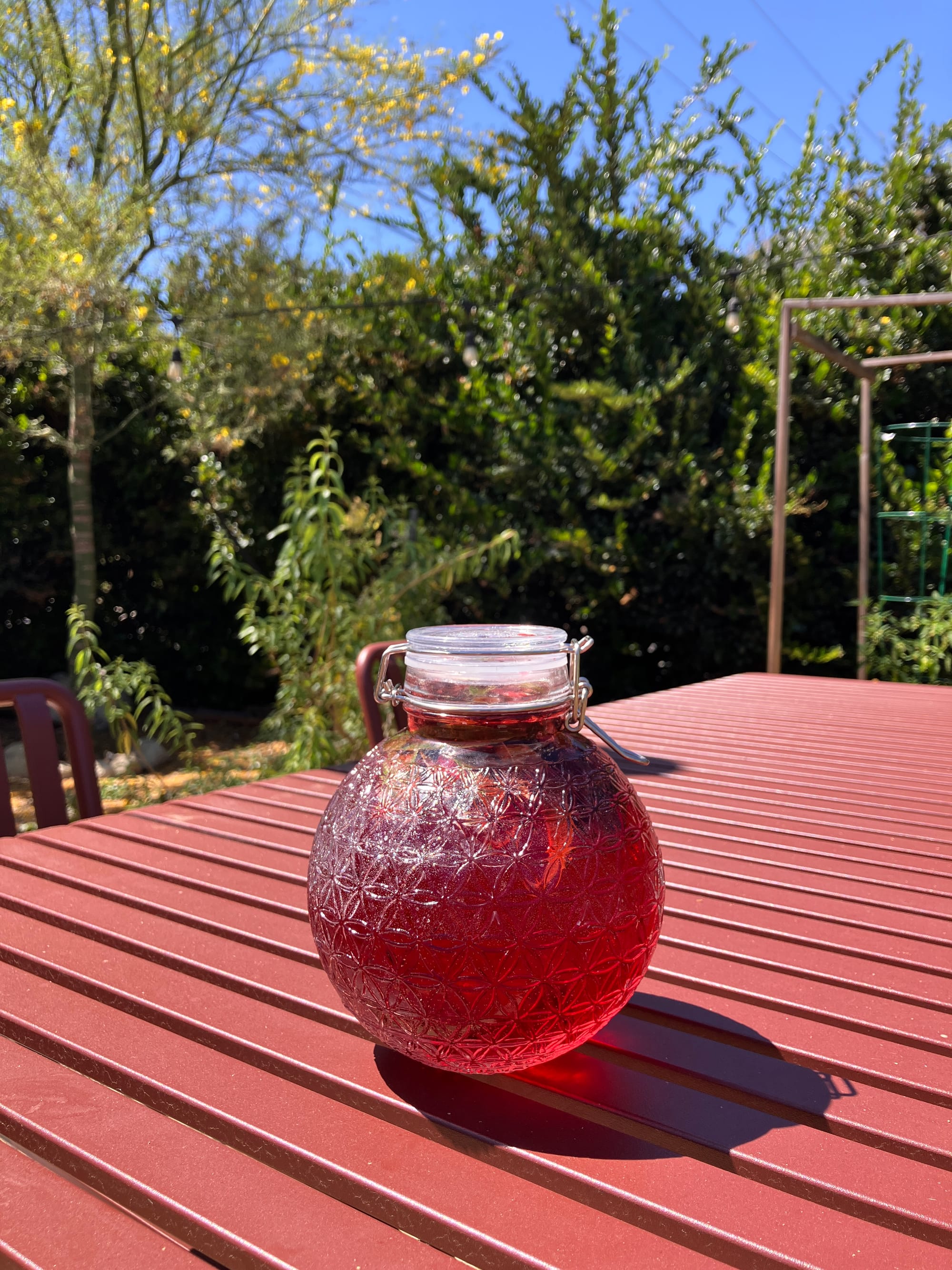
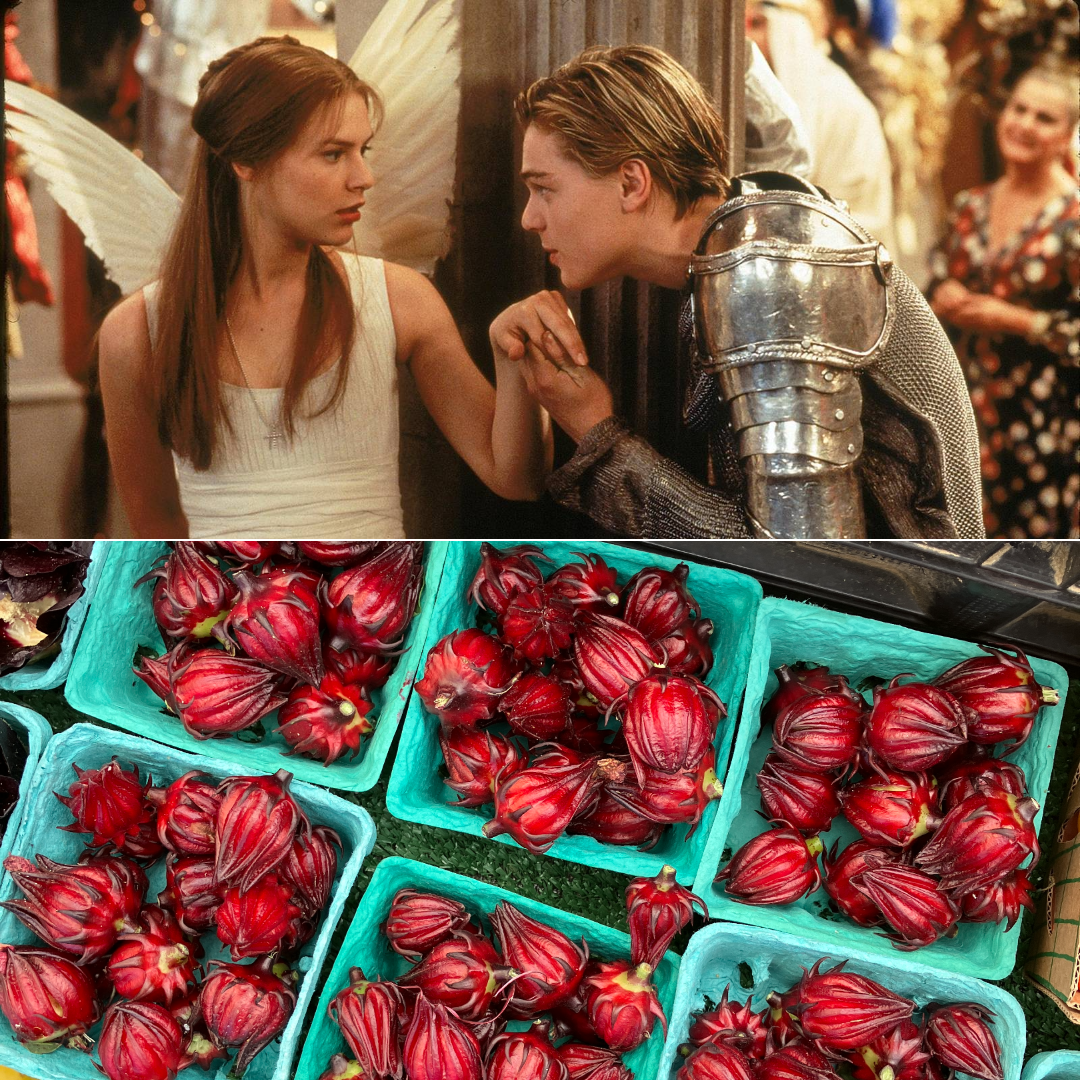
Maybe you've ordered jamaica at your burrito spot. Maybe you saw some funky bright red flower pod things at the farmer's market. Maybe you took a selfie with one of these blooms on your recent vacation. Maybe you missed your mouth and accidentally dribbled some hibiscus tea on your favorite white tee and the stain just won't come out. Whatever your relationship to this tropical plant may be, today let's get back to basics because it really is such a clutch, cooling herb to have on hand this time of the year.
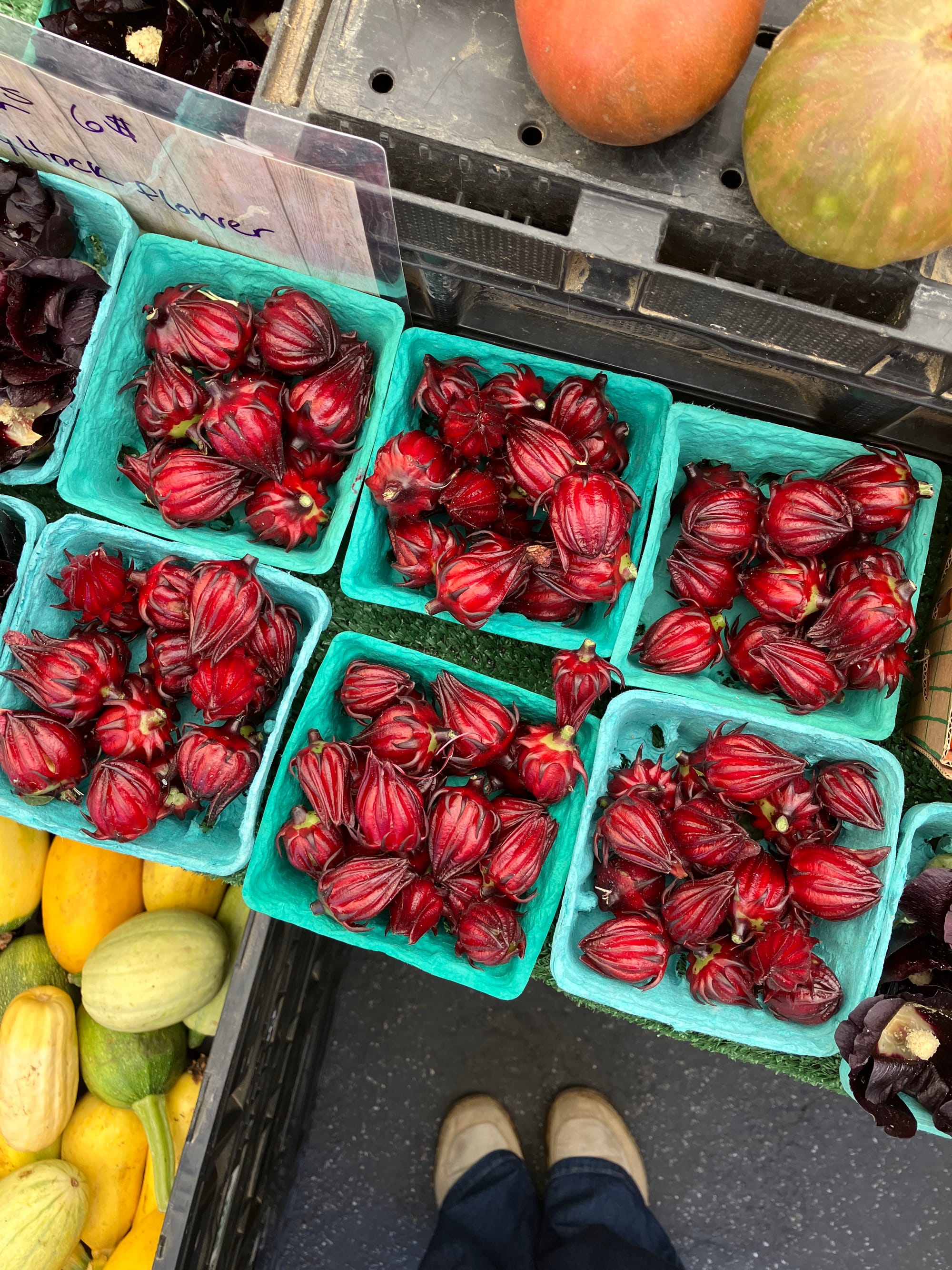
There are hundreds of varieties of hibiscus plants. The one I know and love (and is the most researched) is Hibiscus sabdariffa, a plant that enjoys full sun, moist soil and well-drained soil. It's also called roselle, jamaica in Mexico, sorrel in the Caribbean, bissap in Africa and karkadeh in the Middle East (by the way, east of what? #colonialism). In Egypt, "hibiscus" means "plant that is consecrated to the ibis," a sacred Egyptian bird associated with writing, wisdom and magic. I'll take some of that, please and thank you.
Hibiscus sabdariffa is prized for its ornate flowers (or calyx) that have antioxidants, Vitamin C and antimicrobial compounds, and can help lower blood pressure and glycemic levels. In Traditional Chinese Medicine, the roots are used to clear sinusitis, wet coughs and congestion. And now that Ojai has reached its annual 90-degrees-every-day forecast, I'm reaching for this heat-clearing, diuretic herb nearly every day.
Hibiscus and rose hips are a popular, Vitamin C-packed combo. I love making a solar infusion of hibiscus flowers and whatever other cooling herbs I'm feeling, like lemon balm, lemon verbena, peppermint or passionflower. In a quart or liter jar, I combine 4-6 teaspoons of dried hibiscus flowers with 2-3 tablespoons of any of the aforementioned fresh herbs (cut by 1/3 if using dried), add water, cover and let infuse in the sun for at least one hour.
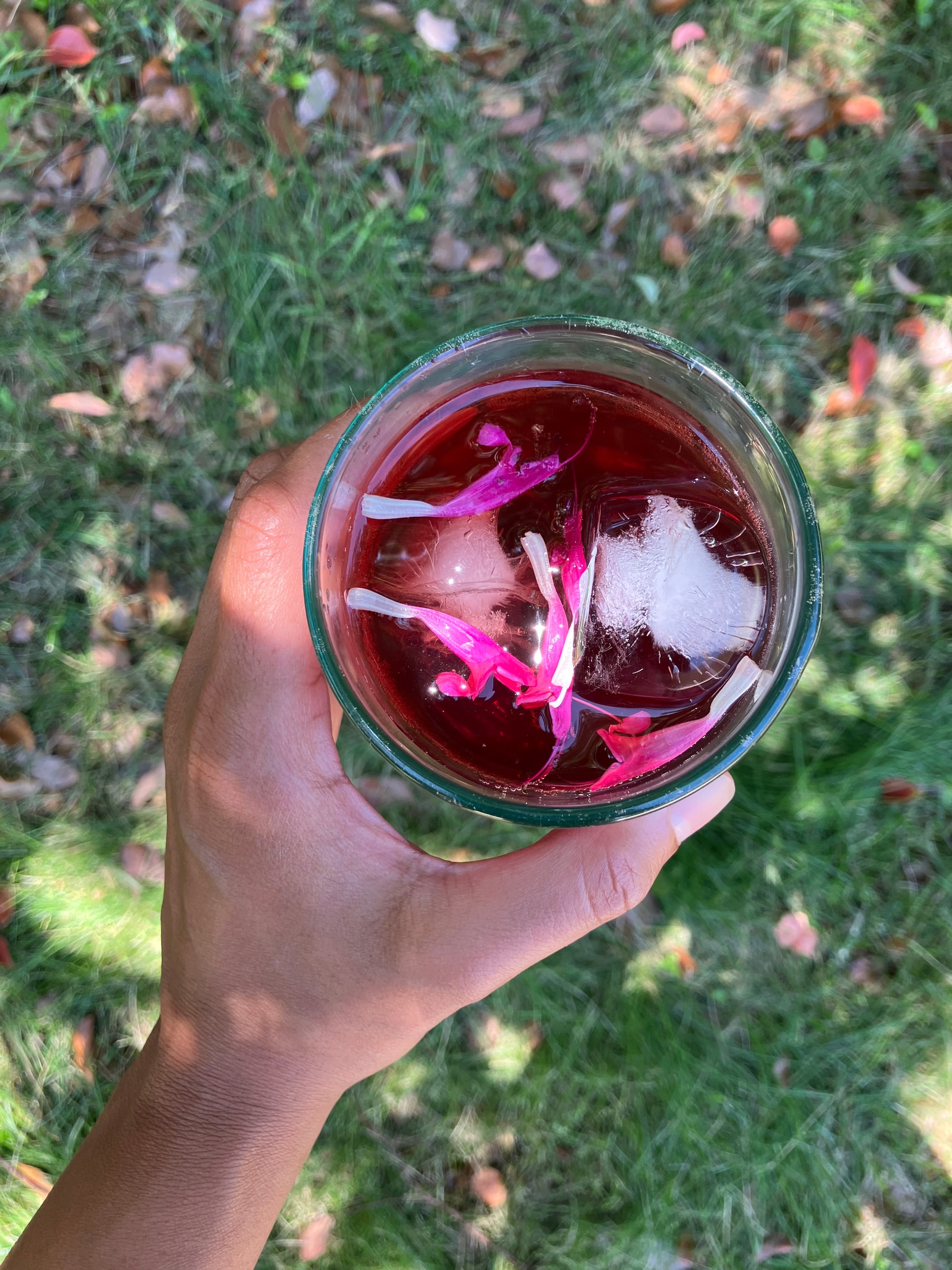
Once I strain it, I'll often mix it with sparkling water. Squeeze some orange over it if I'm feeling wild. The result is a tart and sour ruby red jewel of a mocktail.
Chin chin *clink*!
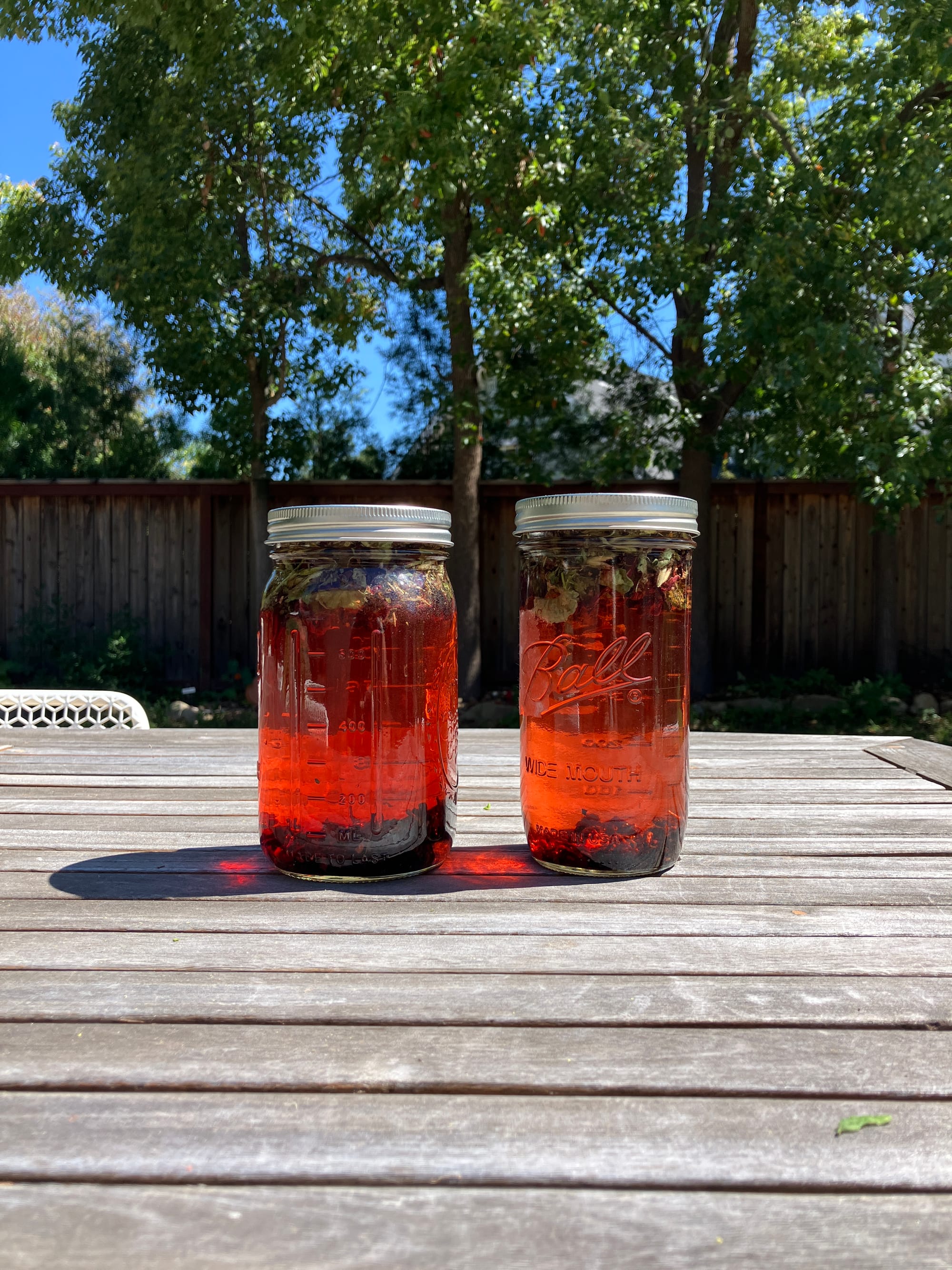
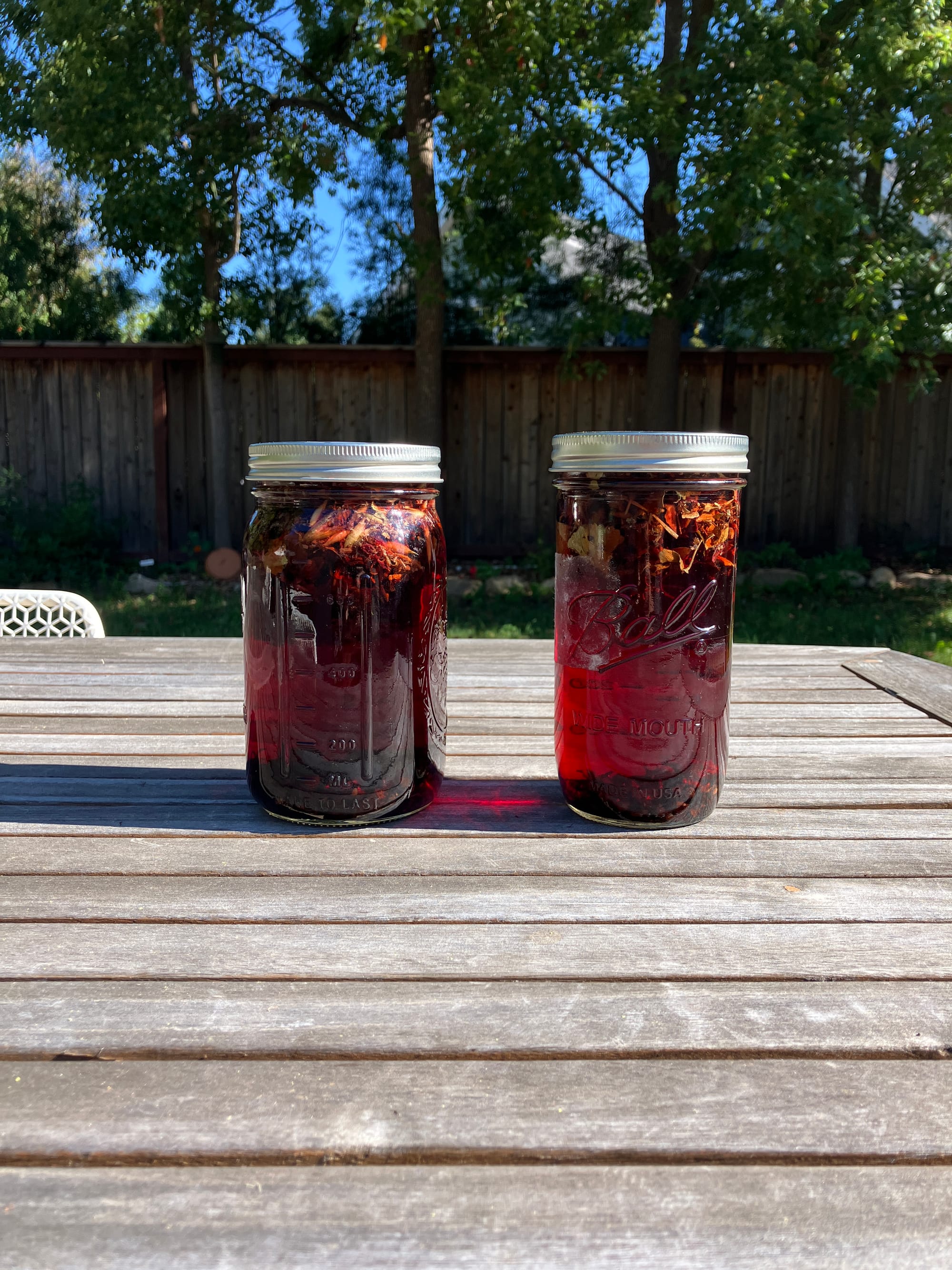
Just-steeped vs. 1.5 hours later
SOURCES
Alharbi AE, AlHussaini AM, Alshami I. A Comprehensive Review of the Antimicrobial Effects of Hibiscus Species. Cureus. 2024 Nov 5;16(11):e73062. doi: 10.7759/cureus.73062. PMID: 39640147; PMCID: PMC11619808.
Gladstar, R. (2015). Rosemary gladstar’s herbal recipes for vibrant health : 175 Teas, tonics, oils, salves, tinctures, and other natural remedies for the entire family. Storey Pub.
Montgomerie, B., & Montgomerie, B. (2019, August 15). The Sacred Sacred Ibis. American Ornithological Society. https://americanornithology.org/the-sacred-sacred-ibis/
Montalvo-González E, Villagrán Z, González-Torres S, Iñiguez-Muñoz LE, Isiordia-Espinoza MA, Ruvalcaba-Gómez JM, Arteaga-Garibay RI, Acosta JL, González-Silva N, Anaya-Esparza LM. Physiological Effects and Human Health Benefits of Hibiscus sabdariffa: A Review of Clinical Trials. Pharmaceuticals (Basel). 2022 Apr 12;15(4):464. doi: 10.3390/ph15040464. PMID: 35455462; PMCID: PMC9033014.
Tilgner, S. M. (2018). Herbal ABC’s: The Foundation of Herbal Medicine.