"I feel like 50% of them got it, and the other 50% need more gay friends," which is the only appropriate response to the 2019 Met Gala. (Could be extrapolated to the whole world, no?) The theme that year was camp, which likely made celebrities, stylists and fashion houses absolutely pressed to download Susan Sontag's seminal 1964 essay on the meaning of "camp." But as that quote from BuzzFeed says, few knew how to translate the esoteric topic into clothing. (See: Karlie Kloss)
So what even is camp? According to Sontag:
"The essence of Camp is its love of the unnatural: of artifice and exaggeration... the 'off,' of things being what they are not... Camp sees everything in quotation marks. It's not a lamp, but a 'lamp.' The pure examples of Camp are unintentional; they are dead serious...When something is bad (rather than Camp), it's often because it's too mediocre in its ambition. The artist hasn't attempted to do anything really outlandish... The whole point of Camp is to dethrone the serious... The ultimate Camp statement: it's good because it's awful."
For me that calls to mind, The Real Housewives of Salt Lake City (Housewives Camp), Showgirls (stripper Camp), Burlesque (stripper-with-a-heart-of-gold Camp), Romy & Michele's High School Reunion (valley girl Camp), John Waters anything (retro Camp), The Love Witch (romance noir Camp) and Clue (murder mystery Camp). That last one is where we land today.
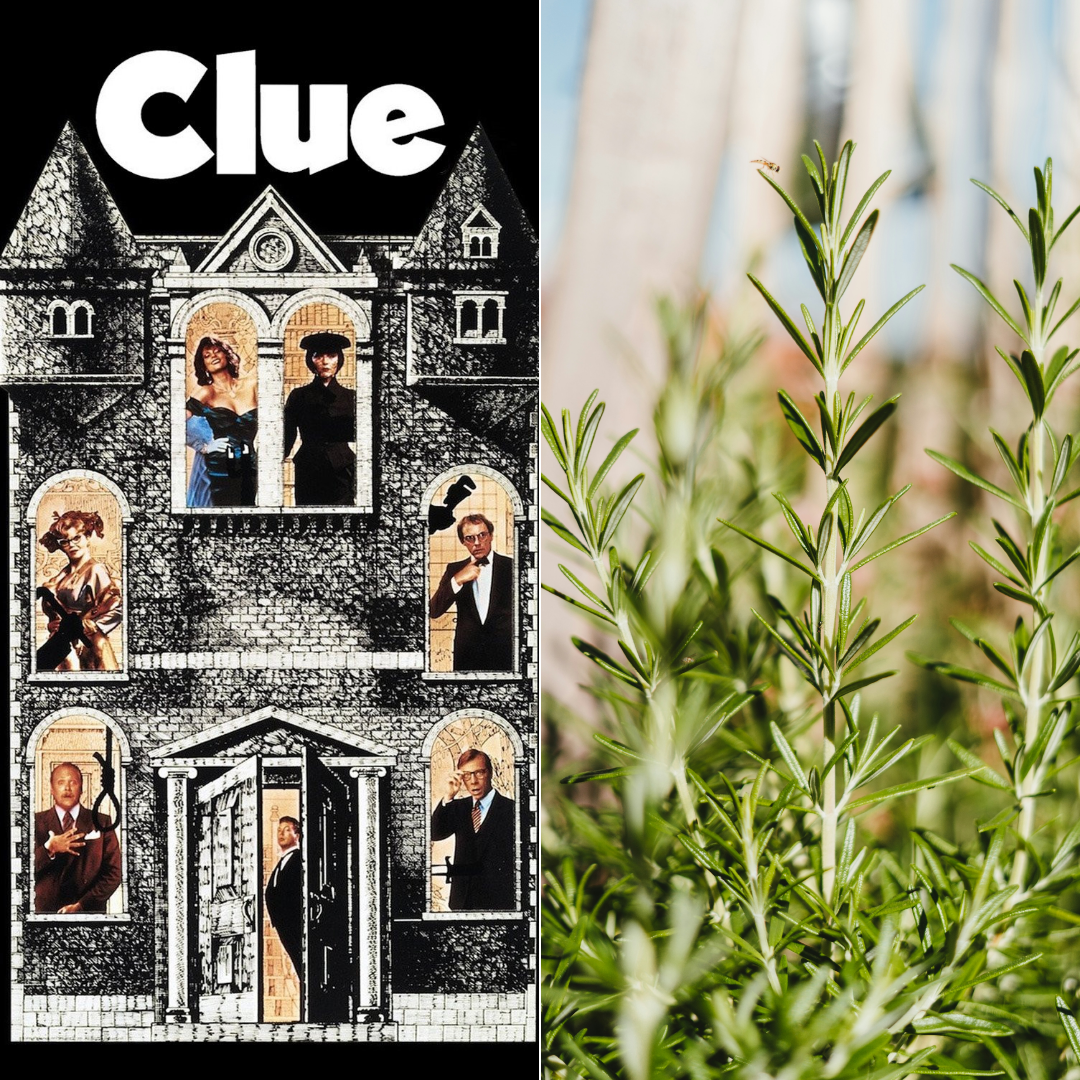
Released in 1985, Clue was not loved when it hit theaters but emerged as a cult classic years later. Over time, audiences came to understand that this flamboyant, frenetic send-up of murder mystery tropes based on a midcentury Parker Brothers board game is so good because it's so bad. That's because the script, the set, the cast—everything is absurd, outsized and outlandish.

And everyone commits to the bit. There's Madeline Kahn as Mrs. White, Tim Curry as Wadsworth, Christopher Lloyd as Professor Plum, Michael McKean as Mr. Green, as so on. In the movie, it's 1954, and they've all been invited to a New England mansion by a "Mr. Boddy." No one quite knows why they're there, but to keep things anonymous (and in line with the board game), they've each been given an alias (e.g. Miss Scarlet). What ensues is a night that reveals blackmail, surprise guests, the board game's iconic weaponry and rooms (the conservatory!) and yes, MURDER.

What also ensues is three different endings. In 1985, it was a crapshoot which ending a theater got. Critics and audiences were confused. Today, when you stream it (for free on Pluto), you see all three. (There's also a rumored never-before-released fourth ending.) It's ridiculous, repetitive, incessant and a mockery of the murder mystery genre. In all the best ways.
In the Entertainment Weekly oral history of Clue, Michael McKean sums it up best: "If you try and make too much sense out of the this movie, you're not going to have any fun. The weirdness of it is kind of its point."
My love for this weird campy movie also has roots in the fact that Clue was one of my favorite board games as a kid. One summer, my best friends and I played Clue nearly every day June through August. Maybe it scratched the same itch as the You Be the Detective kids' book series. The mystery, the problem-solving, the cognitive puzzle of it all.
I didn't start playing board games again until a few years ago when my friends suggested a game night. It's since spawned into a monthly-ish get-together of food, catch-up and games like Wavelength, The Librarians, Anomia and Dixit. Look 'em up. They're nothing like Life or Monopoly but are cerebral candy in their own way.
These games are also communal and analog—two things we all so desperately need in our AI-ified, increasingly isolated worlds—and good for the brain. Studies have shown that playing games can increase memory, attention, critical thinking and could even help prevent dementia.
Pair your game night with a rosemary tea—because I'm positively wild in my 40s—and you have a beautiful combo of brains and buds.

Rosemary (Salvia rosmarinus) often gets pigeon-holed into being an ornament on meat or a sprig cooked down into a soup, and it is indeed a food preservative and helps with digestion, but this kitchen herb has a long history of many health benefits. Ancient Egyptians used it in embalming rituals, ancient Greek physician Dioscorides used it for jaundice and fatigue, and 16th century herbal texts talk about it stimulating menstrual flow.
Rosemary is antioxidant-rich, antiviral and antibacterial. Its list of benefits are long, but our time here is short, so here's an abbreviated list. Rosemary can:
- modulate inflammation
- relieve bloating and sluggish digestion
- improve circulation
- lower high cholesterol and high blood pressure
- address musculoskeletal pain, varicose veins, and headaches
- thicken weak, thinning hair (when diluted in a carrier oil)
- warm up cold hands and feet
What it's often called, though, is the herb of remembrance, a nod to its importance in ancient funeral rites. Even just smelling rosemary has been proven to improve memory (and sinus congestion, FWIW).
Much like games can help clear our cognitive cobwebs and grease our memory, so can this Mediterranean plant that thrives in dry, hot climates without much water. It increases circulation to the brain, helps reduce cloudy thinking and can boost our spirits.

Rosemary is full of essential oils, like luteolin, carnosic acid and rosmarinic acid, and there are oodles of studies from the NIH that have confirmed just how powerful these constituents are. A sampling: Carnosic acid enhances the production of nerve growth factor (a protein that helps keep brain cells alive and well), reduces age-related oxidation in brain tissue and increases antioxidant enzymes. Then there's rosmarinic acid, which can protect neurons from oxidative stress and inhibit prolyl oligopeptidase (you down with POPs?), which in turn, helps memory-related functions. There's also cool research on the promise of using rosemary as not a cure, but as part of a protocol for people with Alzheimer's.
The science may sound a bit complicated, but it's so easy to incorporate rosemary into your everyday. That's beauty of kitchen cabinet herbalism.
- Garnish. Sprinkle fresh or dried chopped rosemary into soups, stews, pastas and side dishes.
- Tea. OK, it does not taste great on its own. It's much tastier and more palatable when paired with other herbs like mint or lemon thyme and a touch of honey.
- Make a dream pillow.
- Take a bath. Make a strong quart of rosemary tea (4-6 teaspoons in 32 oz. of hot water, steeped for 15-ish minutes). Rosemary is warming and stimulating, so it makes for a zesty winter bath.
- DIY rosemary salt. Here's a recipe from herbalist Lucy Jones:
- Finely chop fresh rosemary and mix it into some coarse mineral salt at a ratio of 1 part by volume fresh rosemary to 2 parts by volume mineral salt. Spread the mixture only about a half-inch deep onto a wide flat dish. Cover with a clean cloth, and leave it in an airy place to cure. Stir the salt daily for the next two weeks, then store it in an airtight jar or pour into a salt shaker/grinder.

SOURCES
Alweis E, Alweis R. A Narrative Review of the Benefits of Board Games in Health. Cureus. 2025 Sep 16;17(9):e92484. doi: 10.7759/cureus.92484. PMID: 41111652; PMCID: PMC12535416.
Dartigues JF, Foubert-Samier A, Le Goff M, Viltard M, Amieva H, Orgogozo JM, Barberger-Gateau P, Helmer C. Playing board games, cognitive decline and dementia: a French population-based cohort study. BMJ Open. 2013 Aug 29;3(8):e002998. doi: 10.1136/bmjopen-2013-002998. PMID: 23988362; PMCID: PMC3758967.
Ghasemzadeh Rahbardar M, Hosseinzadeh H. Therapeutic effects of rosemary (Rosmarinus officinalis L.) and its active constituents on nervous system disorders. Iran J Basic Med Sci. 2020 Sep;23(9):1100-1112. doi: 10.22038/ijbms.2020.45269.10541. PMID: 32963731; PMCID: PMC7491497.
Hussain SM, Syeda AF, Alshammari M, Alnasser S, Alenzi ND, Alanazi ST, Nandakumar K. Cognition enhancing effect of rosemary (Rosmarinus officinalis L.) in lab animal studies: a systematic review and meta-analysis. Braz J Med Biol Res. 2022 Feb 9;55:e11593. doi: 10.1590/1414-431X2021e11593. PMID: 35170682; PMCID: PMC8851910.
Jones, Lucy. A Working Herbal Dispensary. Aeon Books, 30 May 2023.
Pengelly A, Snow J, Mills SY, Scholey A, Wesnes K, Butler LR. Short-term study on the effects of rosemary on cognitive function in an elderly population. J Med Food. 2012 Jan;15(1):10-7. doi: 10.1089/jmf.2011.0005. Epub 2011 Aug 30. PMID: 21877951.
Pouya Nematolahi, Mitra Mehrabani, Somayyeh Karami-Mohajeri, Fatemeh Dabaghzadeh. Effects of Rosmarinus officinalis L. on memory performance, anxiety, depression, and sleep quality in university students: A randomized clinical trial. Complementary Therapies in Clinical Practice. Volume 30, 2018. Pages 24-28, ISSN 1744-3881. PMID: 29389474.
Tilgner, S. M. (2018). Herbal ABC’s: The Foundation of Herbal Medicine.
Vagedes J, Henes J, Deckers B, Vagedes K, Kuderer S, Helmert E, von Schoen-Angerer T. Topical Rosmarinus officinalis L. in Systemic Sclerosis-Related Raynaud's Phenomenon: An Open-Label Pilot Study. Complement Med Res. 2022;29(3):242-248. English. doi: 10.1159/000522507. Epub 2022 Feb 9. PMID: 35139518.
Wood, Matthew. The Earthwise Herbal, Volume 1 : A Complete Guide to Old World Medicinal Plants. Berkeley, Calif., North Atlantic Books, 2008.