“The most exciting, challenging and significant relationship of all is the one you have with yourself. And if you can find someone to love the you you love, well, that's just fabulous.” That’s how Carrie Bradshaw summed up everything she experienced over six seasons of Sex and the City. Contrary to where I’m going with this train of thought, let me just say: I love Sex and the City. I’ve rewatched the series in its entirety countless times, owned all the DVDs at one point, and the quotes continue to live rent-free in my head.

I agree with Carrie’s sentiment about self-love, but presenting her truth bomb in a finale that bow-ties things up so neatly to the point that every lead character gets paired up puts some holes in her adage. I’m not saying Carrie, Miranda, Samantha and Charlotte should’ve been sent to a single woman leper colony to make the point about self-love. But to close out a series in a way that even Samantha—Samantha!—gets partnered up feels misaligned with what the show was all about.
OK, maybe you could say that each woman went through all those shitty dates and funky spunk to solidify her Self. And once she loved her Self she could love another. But I couldn’t help but wonder, in the lifelong marathon of cultivating self-love, must partnership be the finish line?

I know this is rich coming from someone who has been with her partner for 20 years, but at this moment in time, it’s the self-love I’m actually working on. I’ve spent 40+ years bending, folding and fawning to please others before myself. I’m working on understanding the behaviors so deeply etched in my body, shifting what's moved in flight and dare I say, love myself?
A few years ago, during my initial intake appointment, my herbalist asked me, “Do you love yourself?” Ugh! The question made/makes me cringe. I couldn’t even understand it. I get being easy on yourself. I get not guilting yourself. I get being proud. I get being confident. But what does loving yourself even mean?
Even if Sex and the City was about self-love—I think it was about friendship more than anything else—theirs put lipstick Manolos on a pig.. I prefer something messier, muckier and less varnished because that’s how it often feels.
Which is why, no, this month we’re not talking about Sex and the City. We’re talking about the 2021 Norwegian film The Worst Person in the World. There’s romance and there’s comedy, but it’s more rom-dram-dark humor. It’s been called Fleabag meets Eternal Sunshine of the Spotless Mind. Or Fleabag meets a Sally Rooney novel.
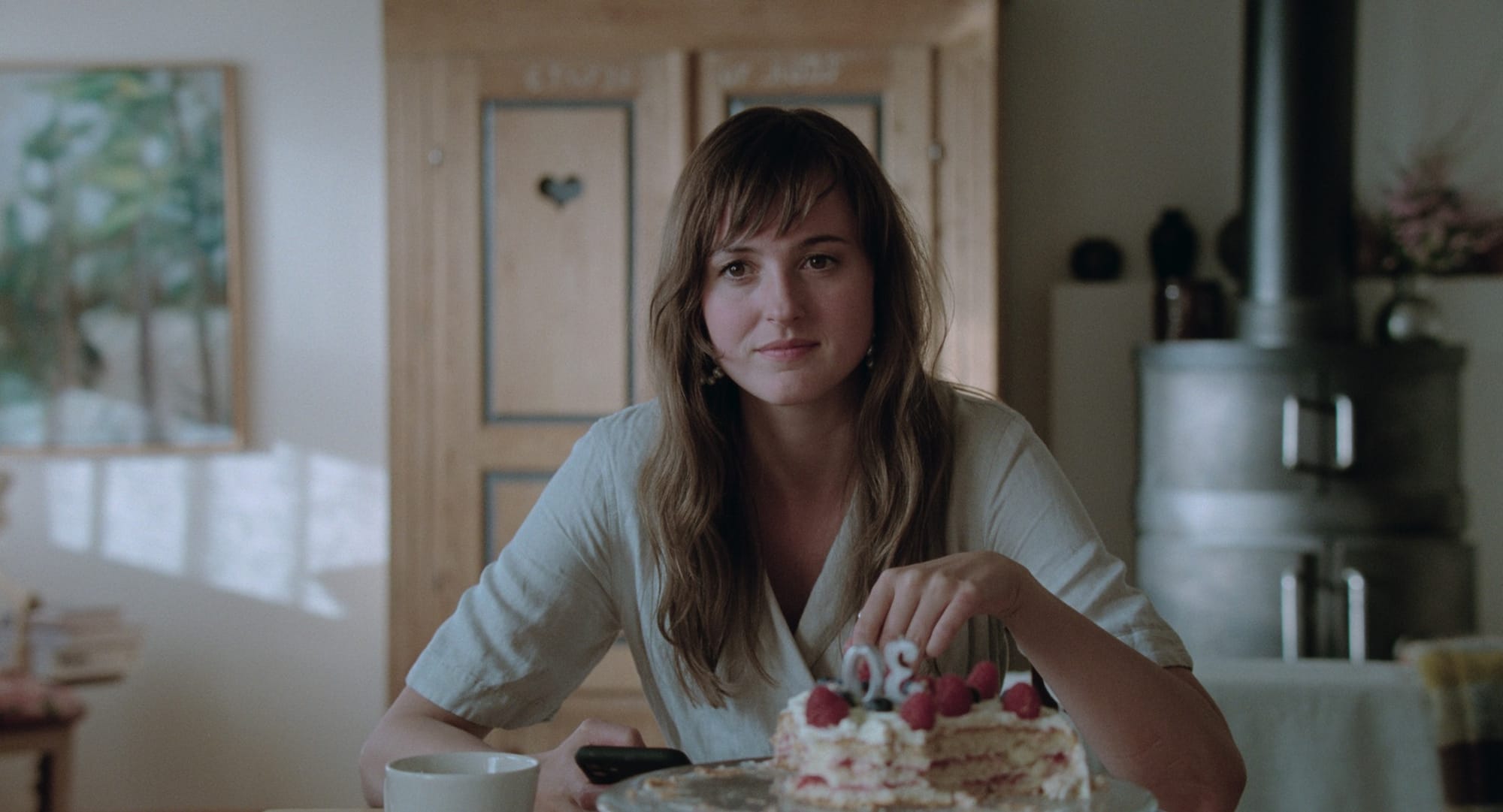
The question that threads the two-hour movie is “Who am I?” and what unfolds is a series of heart-bursting, heart-breaking moments that set our main character, Julie, on an existential search for the relationship she’s building with herself, even if she doesn't know it.
WPITW is told in 12 chapters, bookended with a prologue and an epilogue. In the prologue, we see just how much Julie (played by the amazing Renate Reinsve) is trying on selves for size. She switches her major from medicine to psychology, to photography. And with it, she changes her hair color, her fashion and her paramours.
The film focuses on two of her relationships—the first with Aksel (Anders Danielsen Lie), a 40-something artist who’s gained popularity for his “vaguely sexist” comic. Aksel says their 10+ year age gap is grounds for not pursuing things further, but the force is strong with these two.
Julie moves in with Aksel. Sex and laughs ensue, but cracks start to show. Like when they go to his friends’ house in the country and the question of kids comes up. Aksel wants them; Julie is unsure. Aksel loves his friends; Julie chafes at them. In one of my favorite scenes, she breaks down the publicity of male sexuality:
"Personally, I feel like I know everything about male problems. Erectile dysfunction, morning wood, infatuation with young women, premature ejaculation. It's in all the books and movies. Where's the menstrual period? Female orgasm and desire? Where? If men had periods, that's all we'd hear about."
Then the movie shifts to her relationship with Eivind (Herbert Nordrum), a barista Julie meets at a party while she’s still with Aksel. Eivind has a girlfriend, too. So Julie and Eivind test the boundaries of cheating without crossing that line (in their minds).
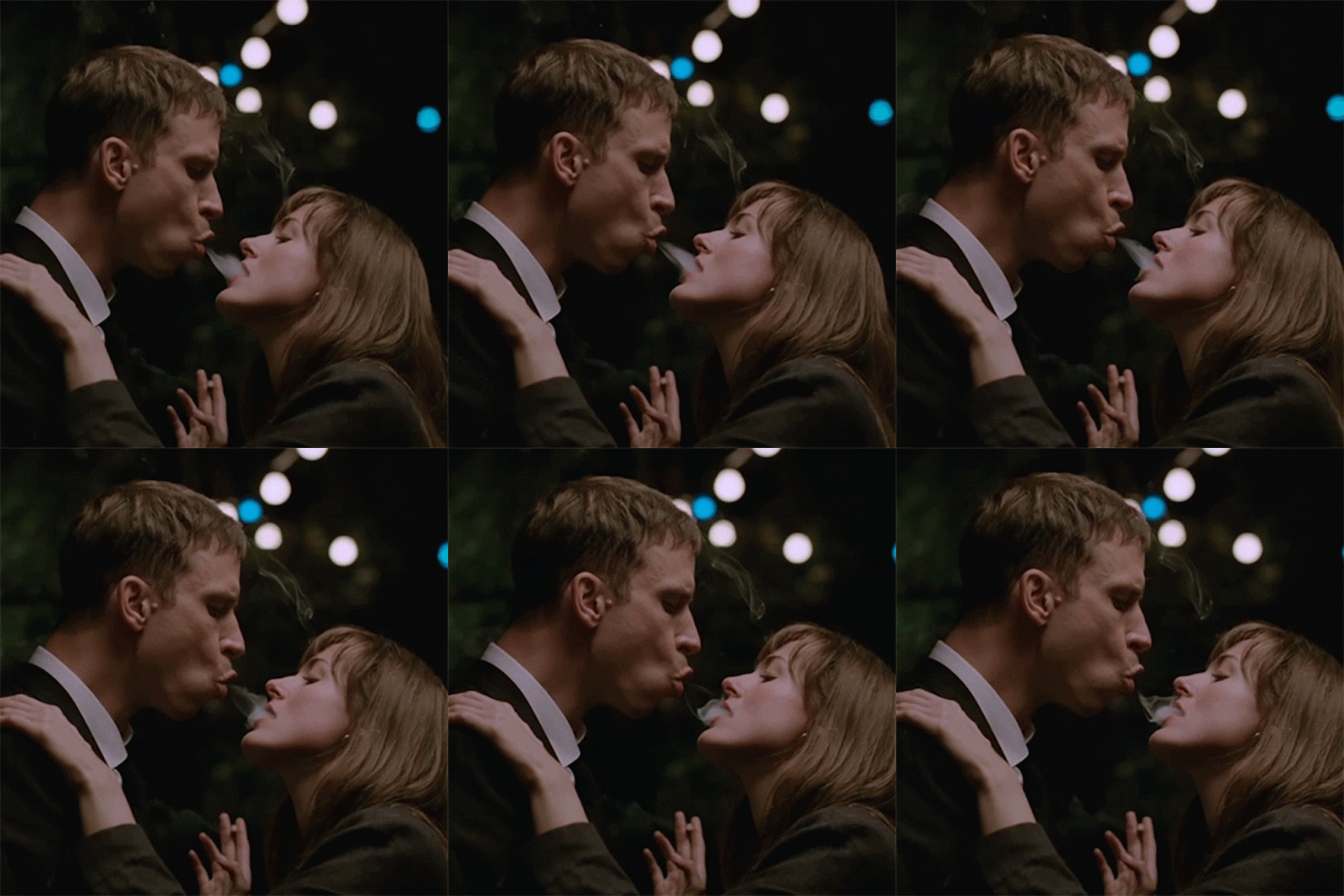
The meet-cute has a big impact on Julie. It cracks her heart open, enough to realize that Aksel isn’t her person. That’s where we get the movie’s most famous sequence, one that visualizes the feeling when your heart swells and emotions overfloweth. Time stands still. Here, director Joachim Trier explains how he filmed it:
And yet. With Eivind, there are different issues. Aksel was maybe too accomplished, too cerebral. Eivind isn’t enough of either. And she tells him that pretty point blank. “You don't mind serving coffee til you're 50, but I want more!”
It becomes clear that Julie is mostly learning what she doesn’t love, and sometimes knowing what we don’t want is the one-foot-in-front-of-the-other mentality we need to understand who we are and what we want.
No spoilers, but the ending feels true to who Julie is—tender but cutting, confident but vulnerable, bright but gloomy. She contains multitudes, and to see how all those contradicting pieces play out as she fumbles her way to figure out who she is, that’s the kind of relatable coming-of-age story I can latch onto. As Angelica Jade Bastién said in New York Magazine: “The Worst Person in the World acts as a forceful reminder that the entanglements between women and the love interests dancing in and out of their lives matter less than the lifelong relationship we must maintain with ourselves.”
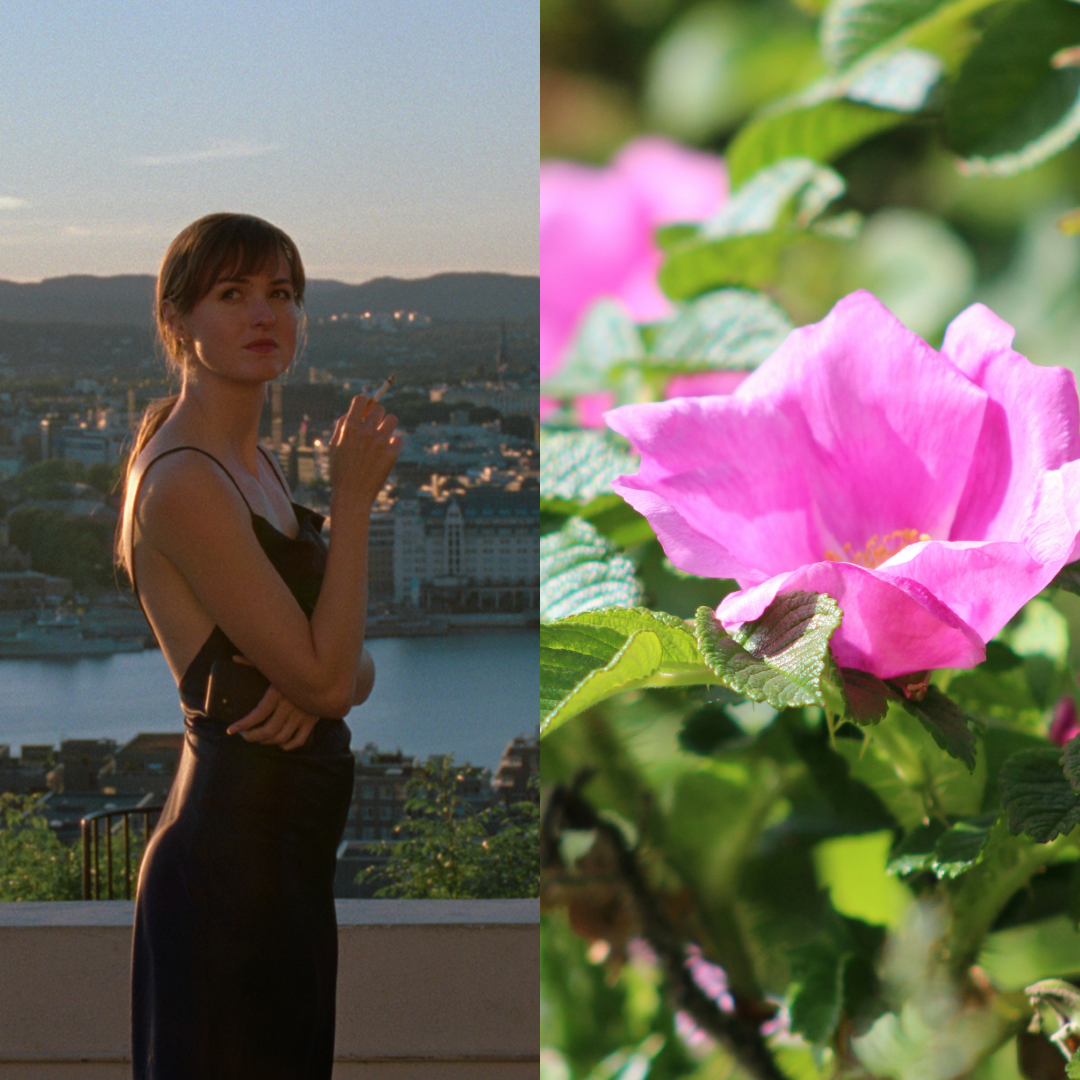
As I rewatched WPITW for the third time recently, rose kept popping up.
Roses? For Valentine's Day? Groundbreaking.

No, I want to peel back a layer (a petal?) to subvert everything you think you knew about roses.
Fossil records show that Rosa species have existed on our planet for at least 40 million years. And about 5,000 years before they became synonymous with a Hallmark holiday, roses were a staple of Islamic, Indian and Chinese healing traditions.

Like Julie, roses contain multitudes—soft petals with sharp thorns, powerful yet gentle on our system, cooling but also slightly warming.
Roses love on many places in our bodies, but the heart is tops. That’s why it’s often considered one of the best supports for grief, heartbreak, trauma, conflict, loss—whether that's personal or collective. Also for reconnecting us with our Self. I love how herbalist Rebecca Altman talks about rose medicine:
“The reason I think that [rose] often brings such a deep emotional reaction is that what people are feeling is themselves. If you’ve been tensing and bracing and pushing and feeling so stressed and so traumatized by life, and then all of a sudden you feel this connection to the deepest, oldest part of you that is ok and bright and shiny and whole and open and deeply connected to the world around you..it’s like a remembrance.”
There are said to be more than 200 varieties of roses—the ones that pop up most often in plant medicine chatter are Rosa canina (Dog Rose), Rosa rugosa (Beach Rose), Rosa damascena (Damask Rose, one of the most fragrant) and Rosa centifolia (Cabbage Rose). All parts of roses, minus the seeds, are medicinal, including the leaves, roots and sepals, but two good starting points are the petals and hips.

Roses dig full or partial sun and moist, but not soggy soil. Also like acidity. Much like I do for my potted blueberry, I work spent coffee grounds into the soil around my R. rugosa—which is a more drought-tolerant rose—every month or so.
For me, rose is primarily a nervous system best friend.
“I think of rose as holding our hand while we begin to face the things that we have shut away inside,” says herbalist Lucy Jones. “Shutting distress and trauma away in the body may be the only way that we are able to carry on with life’s responsibilities following intense and distressing events. [Rose’s] action on the heart allows it to begin to loosen its grip on hidden experiences, and its action in supporting our livers and digestion help us better digest the emotions as they arise.”
Rose is cooling and slightly bitter (ancient Persian physicians say red varietals are slightly warming). In general, cooling plants are a gift to the nervous system. If you think of anxiety and stress, they’re energetically “hot.” Say, “burned out” or “frazzled.” So what do we tell ourselves when we need to relax? “Chill out.” (That said not all nervines are cool; linden, for example, is a warm, sweet leaf that soothes our nervous systems, too.
Bitter plants are also nice allies for our nervous system. Some researchers say that when we ingest something bitter, the herbal constituents send a message to our vagus nerve, which then tells our parasympathetic nervous system to “rest and digest."
In Traditional Chinese Medicine, rose also decongests stagnant qi, the vital energy that sustains us. That blocked or stuck qi can lead to depression, moodiness and pain. It also keeps the liver from properly doing its very important job of detoxifying, filtering, digesting and metabolizing.
All that to say, “stop and smell the roses” isn’t just a cute saying. For a bath, try a strong rose petal tea—1-2 tbsp of dried petals in 4 cups of water, steeped covered for 30 minutes—and pour that infusion into a bath or add some fresh or dried petals to a tea bag (or clean sock) and let the petals infuse in while you bathe. Or diffuse the essential oil so you can breathe it in. Or make a dream pillow.
But wait! There’s more:
Rose x female reproductive system
Rose petals help bring warmth and circulation to the pelvis. If you have painful, heavy or irregular periods, try rubbing rose oil on your lower abdomen. (Not the undiluted essential oil directly on your skin but a few drops mixed with a carrier oil like jojoba, almond or sesame oil.)
Rose x gut and respiratory system
If you’ve heard uptight wine people talking about tannins, then you may have heard of this astringent, bitter plant constituent. Tannins are the stuff that make your mouth pucker. Rose hips have them, too, and that astringency helps relieve diarrhea, gastric ulcers or irritable bowel syndrome. The hips as a tea also soothe inflamed gums and sore throats.
Rose x skin (topical)
There’s a reason rose is used in so many skincare products. Its anti-inflammatory and antibacterial compounds help settle irritated, inflamed, or sunburned skin. It’s why many waxing and threading salons offer rosewater (a distillation of rose petals) after yanking your hair out. Witch hazel—another astringent—is often rose-infused, too.
Rose x immune system
Rose hips have 20 to 30 times more Vitamin C than oranges. In the summer or when I have internal heat/inflammation (i.e. hives), I love an antioxidant-rich tea made of hibiscus flowers and crushed rose hips—use a mortar and pestle or a dedicated spice mill to grind. ½ – 1 tsp of each, steeped for 20 minutes covered and then chilled.
A word from the herbalist: Avoid all parts of rose during pregnancy. Never take rose essential oil internally. The seeds are toxic and can cause vertigo, headaches and torpor.
Here are three ways I’ve been adding rose to my life lately:
Evening Repose Tea
From a great beginner’s book, Rosemary Gladstar's Herbal Recipes for Vibrant Health
- 2 parts spearmint leaf (milder than peppermint)
- 1 part chamomile flower
- 1 part lemon balm leaf
- ½ part rose petal (less if you don’t love floral flavors)
- A pinch of stevia to sweeten (optional)
Combine all ingredients in a tea bag or strainer. (Remember that 1 part = whatever measurement you choose, whether it’s a teaspoon, tablespoon or something else. Multiply as needed.) Pour just-boiled water over all ingredients except the stevia, if using. 4-6 tbsp of dried herb (or 6-8 tbsp of fresh herb) in 4 cups of water. Steep covered for about 20 minutes. Strain and enjoy.
Rose Petal Honey
From A Working Herbal Dispensary by Lucy Jones
- Powder dried rose petals in a Vita-mix or a dedicated coffee grinder that is used only for herbal medicines.
- Sieve the resulting powder so that it is even.
- Stir the powder into runny honey, aiming for a proportion of around 1 part by volume of rose powder to 3 parts by volume of honey, but you can vary the proportions according to your own preference. Stir well and leave in the jar to cure.
- Over the next few weeks, the honey will become much firmer in texture and will be filled with the fragrance of dried rose petals. Stir 1 tsp into hot water or add to your herbal tea when you are feeling in need of a concentrated boost of rose.
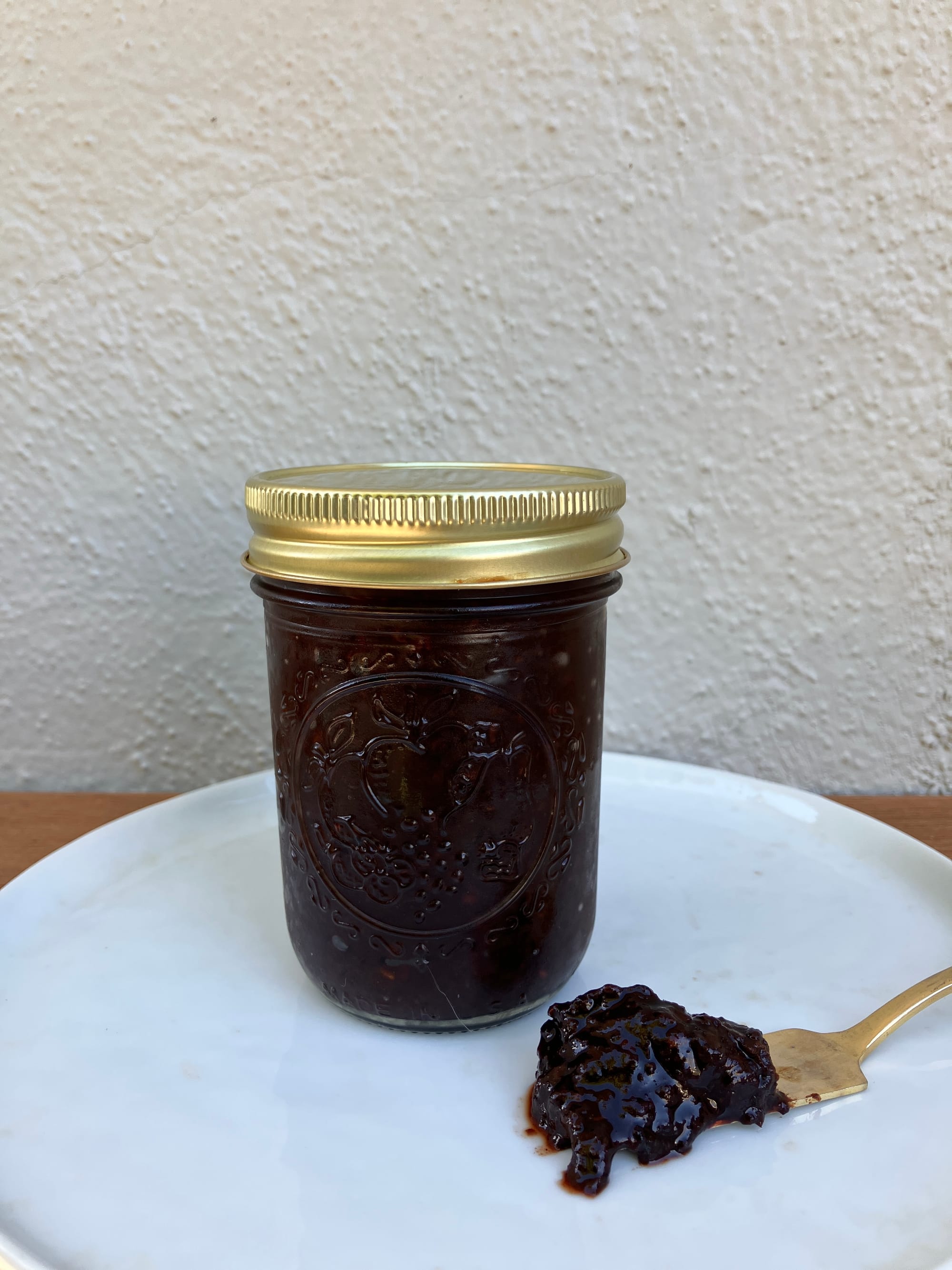
Good-Vision No-Cook Herbal Jam
Adapted from Rosemary Gladstar's Herbal Recipes for Vibrant Health
- 1 part blueberries (I used organic frozen wild blueberries)
- 1 part dried elderberries
- 1 part dried seedless rose hips
- Freshly grated ginger
- Honey
- Soak the dried elderberries overnight in enough water to cover the berries by a few inches to help reconstitute. Then drain.
- Mix the berries together in a saucepan. I did ½ cup of each fruit. Add a pinch or two of ginger. Add enough water to cover the fruit completely, then add another 2 cups of water.
- Place a lid slightly ajar on the saucepan. Bring the mixture to a boil, then turn the hear to low and simmer until the water level again just covers the fruit. This was about 1.5 hours for me.
- Remove from heat and let cool. Please the mixture in a blender and puree.
- Return the mixture to the saucepan and add honey to taste. Warm it just until you can mix in the honey thoroughly.
- Pour or scoop the jam into glass jars and store in the fridge, where it will keep for up to two weeks. If you make a big batch, you can pour some of the jam into freezer bags and freeze it for later use. Eat a dollop or two of the jam every day, spread on toast, crackers, bagels, etc.
Sources
Başer, K. Hüsnü Can. “Rose Mentioned in the Works of Scientists of the Medieval East and Implications in Modern Science.” Natural Product Communications, vol. 12, no. 8, Aug. 2017, p. 1934578X1701200, https://doi.org/10.1177/1934578x1701200843.
Guantario B, Nardo N, Fascella G, Ranaldi G, Zinno P, Finamore A, Pastore G, Mammano MM, Baiamonte I, Roselli M. Comparative Study of Bioactive Compounds and Biological Activities of Five Rose Hip Species Grown in Sicily. Plants (Basel). 2023 Dec 23;13(1):53. doi: 10.3390/plants13010053. PMID: 38202361; PMCID: PMC10780848.
Herbs With Rosalee. “Roses with Rebecca Altman + Rosehip Liqueur Recipe.” YouTube, 19 Oct. 2021, www.youtube.com/watch?v=wCDwnEFE7Iw.
Holmes, P. (1989). The Energetics of Western Herbs: Volume 1: A Materia Medica Integrating Western and Chinese Herbal Therapeutics (Vol. 1). Snow Lotus Press.
Jones, Lucy. A Working Herbal Dispensary. Aeon Books, 30 May 2023.
McMullen, Michael K., et al. “Bitter Tastants Alter Gastric-Phase Postprandial Haemodynamics.” Journal of Ethnopharmacology, vol. 154, no. 3, July 2014, pp. 719–727, https://doi.org/10.1016/j.jep.2014.04.041.
McMullen MK, Whitehouse JM, Towell A. Bitters: Time for a New Paradigm. Evid Based Complement Alternat Med. 2015;2015:670504. doi: 10.1155/2015/670504. Epub 2015 May 14. PMID: 26074998; PMCID: PMC4446506.
Mohebitabar S, Shirazi M, Bioos S, Rahimi R, Malekshahi F, Nejatbakhsh F. Therapeutic efficacy of rose oil: A comprehensive review of clinical evidence. Avicenna J Phytomed. 2017 May-Jun;7(3):206-213. PMID: 28748167; PMCID: PMC5511972.
Schwager J, Richard N, Schoop R, Wolfram S. A novel rose hip preparation with enhanced anti-inflammatory and chondroprotective effects. Mediators Inflamm. 2014;2014:105710. doi: 10.1155/2014/105710. Epub 2014 Oct 13. PMID: 25371599; PMCID: PMC4211164.
Winston, David. Herbal Therapeutics: Specific Indications for Herbs & Herbal Formulas. Herbal Therapeutics Research Library, 2013.
Wood, Matthew. The Earthwise Herbal, Volume 1 : A Complete Guide to Old World Medicinal Plants. Berkeley, Calif., North Atlantic Books, 2008.