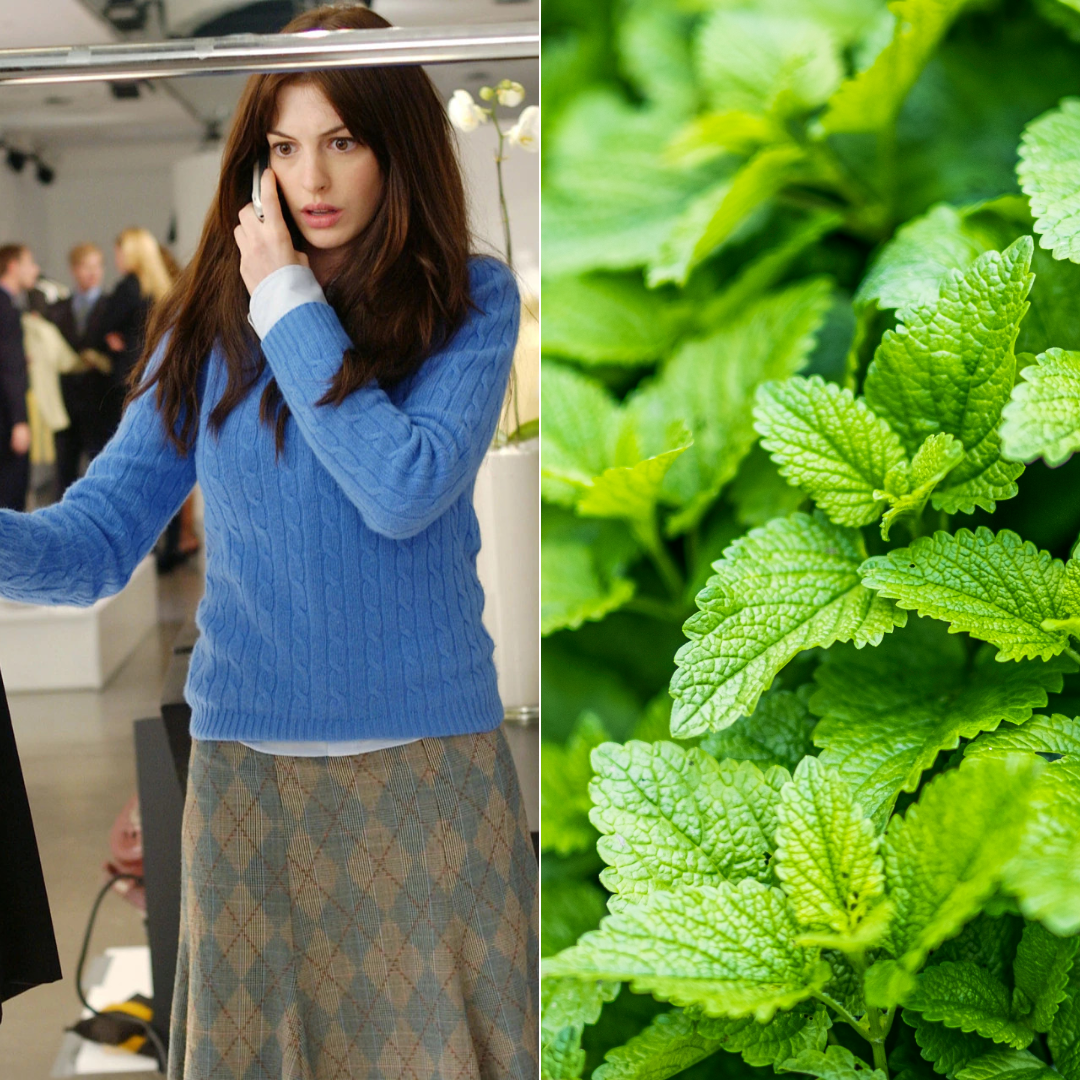
If aliens were to analyze early 2000s comedies, they’d think that the most stressful job on Planet Earth is being an editor at a women's magazine. The not-so-subtle dress code. The cutthroat competition. The hours-long meetings to generate listicles like “250 dudes dish guy secrets” (which is a real thing). Truly, stress hath no greater platform than an early aughts movie about a woman trying to climb the ladder at Runway, Composure, Poise or Sparkle. See: Jennifer Garner in 13 Going on 30, Kate Hudson in How to Lose a Guy in 10 Days, or Anne Hathaway in The Devil Wears Prada.
I once worked at a women’s magazine in New York City. And yes, there was that time the editor-in-chief walked to each of our desks to assess our body shapes and she flatly told me I was a “boy shape.” There was also an internship at a children’s magazine where the editor-in-chief had me create a recipe book for her grandkids. I guess in that moment I did feel like Anne Hathaway’s Andy Sachs in The Devil Wears Prada. But instead of bolting to Hermès and Armani, I was hustling to office supply stores in midtown Manhattan. I’m not sure which is worse.
I rewatched the first Devil Wears Prada recently and I remembered how comforting everything about it is—Andy's glow-up wardrobe, the music and of course Meryl.

But dang, I didn't realize how much the movie is riddled with fat-shaming, which was ultimately just mirroring back the culture at that time. At the Elias-Clarke cafeteria, for example, when Andy tells Nigel she’s a size 6, Nigel says that’s “the new 14.” And now, in The Devil Wears Prada 2, which came out May 1, Nigel calls her "6." A bit more tongue-in-cheek this time.
It's one of the sequel's many, many, many, many, many, many, many, many throwbacks to the original. Yes, we all went to see DWP2 partly for nostalgia, but the score was the same, Andy's bumbling, frenetic energy was the same (girl, even after 20 years?), the camera framing of Miranda and Andy in the limo was the same, Andy's cringe-y conversations with her friends were the same, Andy had yet another useless boyfriend, and there were two (two!) nods to the famous cerulean scene.
Sure, I wanted a couple red threads—like a Miranda "that's all"—but the references to the original felt heavy-handed, like someone was poking me while watching. "Did ya see that? Did ya catch that?" It reminded me of the 2021 Friends reunion on HBO. We didn't really need it and we just rehashed old stuff, but sure, it was nice to see the gang back together. Or it's like the plight of a Real Housewife's second season. She was beloved in her first season, drank the fan Kool-Aid, amped up her quirks, and now she's kind of annoying.
What was different was the DWP2's spot-on take on magazines and media today. Or as Emily says, "Remember when magazines were a thing?" Also different was a bit more diversity. Anne Hathaway was adamant about size inclusivity for the sequel. (Tangent: That's great on Anne, but I think Hacks’ Hannah Einbinder nailed it when she connected the dots between the rise of fascism and skinny coming back in fashion. The skinnier women are, she says, the less space they occupy in the world.)
But I digress. Despite all my nagging, I did enjoy this silly little sequel. It was entertaining, pretty and made me miss my magazine days.
I’ve only freelanced for Vogue (the obvious doppelgänger for Runway), never set foot in their office, and besides that one women’s fashion magazine job, I went on to work at other magazines with a wider aperture—pop culture, regional city news, etc. There was stress, yes, but it came from 1.) trying to make rent in Manhattan on an editorial assistant’s salary and 2.) my own sometimes masochistic strive to do great work.
Like that time I was just one week into living in San Diego and was assigned a “best hikes in the county” cover story after having what I thought was a casual intro meeting with the editors. The stress I felt trying to learn my new city within a few weeks while also having the authority to dictate what was “best”—oh, my stomach was all over the place. In fact, I couldn’t stop burping from the stress. I was swallowing so much air and taking super shallow breaths.
Back then, I forged ahead because, hello, I was on deadline. Now, I would do things differently. I’d still be stressed as hell, but I’d also reach for lemon balm—a fragrant plant from the mint family that’s an uplifting plant to help ease stress, especially when that stress holds your digestive system hostage (e.g. nausea, cramps, bloating, IBS).
Melissa officinalis is a bushy, perennial shrub that likes sun and moderate water, but in my hot inland Southern California climate, it loves the partial shade and after a few years in the ground, has become amenable to my sporadic, forgetful watering schedule. (Bees love it, too; "Melissa" is Greek for "honeybee.") As a member of the mint family, it spreads but from my experience, not as robustly as peppermint. Right now, lemon balm is popping both in my garden and at farmer’s markets.

Lemon balm is calming, cooling, sour and a little lemony. It can soothe stress in our gut, menstrual cramps included, thanks to the bitter plant constituents and aromatic volatile oils, while helping boost mood, too. If you have a fever, lemon balm works well as an antiviral and diaphoretic, meaning it helps you sweat things out. And because it has a calming effect on the whole body, lemon balm can help us sleep a bit more soundly.
Most herbalists recommend enjoying it fresh to get the full benefits (~1 tablespoon of chopped fresh herb in 8 oz of hot water, steep covered for 20 or so minutes; if using dried, 1 heaping teaspoon).
There's a lot of lore around lemon balm, women and goddess worship. As Deb Soule says in her book The Woman's Handbook of Healing: "In ancient European Goddess-worshipping cultures, bees were seen 'as a symbol of the feminine potency of nature, because they create this magical, good tasting substance and stored it in hexagonal cells of geometric mystery.'" She adds that with a magnifying glass, flowers in the mint, or Lamiaceae a.k.a. Labiatae, family, "have lips...similar to the labia." Priestesses of Aphrodite were called "Melissa." And Aphrodite herself is called the "the primal mother of all ongoing creation."
Also Mother:
This is cinema.
Sources
Jones, Lucy. A Working Herbal Dispensary. Aeon Books, 30 May 2023.
Soule, Deb, and Susan Szwed. The Woman’s Handbook of Healing Herbs. Simon and Schuster, 1 Aug. 2011.
Wood, Matthew. The Earthwise Herbal, Volume 1 : A Complete Guide to Old World Medicinal Plants. Berkeley, Calif., North Atlantic Books, 2008.