
There’s something soothing about self-imposed tension and release. Like in yoga—eagle arms, a chair twist or at the end of class, when the teacher asks you to curl up into a tight ball, squeeze everything together, then let it all go into shavasana, or corpse pose. Ah, contorting yourself into a tangled mass only to unwind and feel spaciousness where you didn’t think you had any left.
There isn’t evidence that yoga twists detox our organs or joints, as some teachers like to say; our liver and kidneys are responsible for much of that. But studies have shown that releasing after a twist helps move oxygenated blood. And there’s the more spiritual point of view that those twists provide an emotional release.
This tension-release is why I go to yoga. It’s also why I watch The Real Housewives. I’ve tuned in since Vicki Gunvalson and the sky top-clad OC housewives traipsed onto our screens in 2006. It’s what I watch most nights, when I’m sick, on a plane, you name it.
In 2019, when Bravo announced Salt Lake City would be the newest franchise to join the Housewives canon, I and many others didn’t get it. Mind you, this was pre-MomTok. Utah wasn’t yet on the reality TV map.
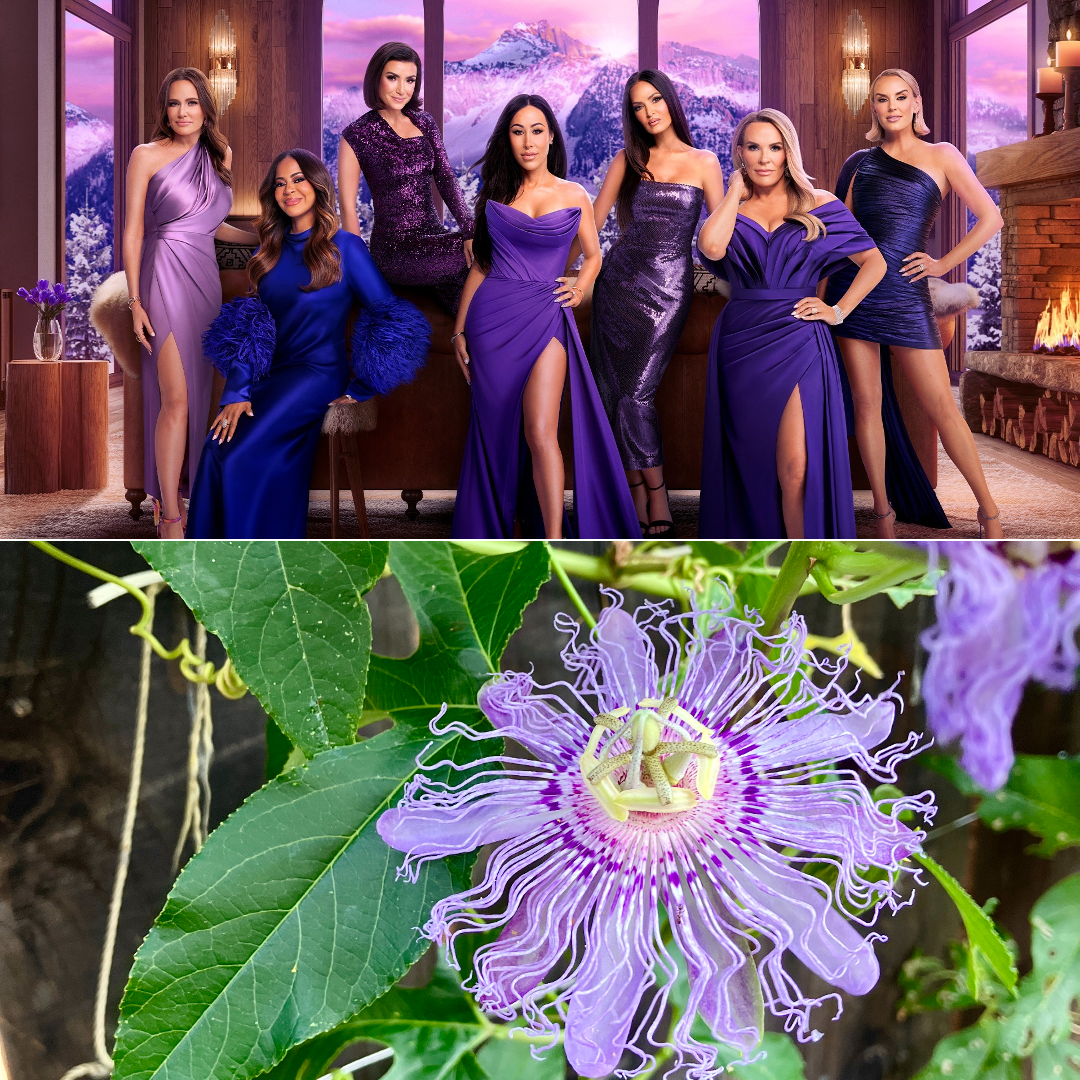
Five seasons in and with the sixth currently airing, who knew we’d get FBI raids, a “garbage whore” hot mic moment, a woman married to her step-grandfather, a fan surreptitiously joining the cast, high body count hair, a text message game so diabolical it should be illegal and outfits like this:

The fashion is wilder and the fights are wilder. Other Housewives fights can escalate, but few casts move from one topic to the next so quickly and shift alliances this rapidly. Take RHOSLC’s garden party from hell episode a few weeks ago. Before the halfway mark, we got a:
- showtune
- urban legend about the winery being the site of a murder, from which the family dog never recovered
- battle of who lives in the most prestigious SLC zip code
- health "diagnosis" from an intuitive
- credit cards hurled across the table
That’s not to say that RHOSLC is without its flaws. Anyone who becomes a Housewife circa now is self-aware and plotting the mezcal, cookbook or three-wick candle she'll milk out of her 15 minutes. And on RHOSLC, Heather produces, Angie K. rehearses her confessional zingers and Whitney's often grasping at straws to keep her spot on the call sheet. The reality TV landscape is totally different now. Chic, c’est la vie.
And still, I love it. RHOSLC is a campy, over-the-top swirling ball of crazy laced with a thirsty desperation for perfection that underpins everything these women say, do and wear. (For half of them, Mormonism underpins what they say and do, too.)

Unlike Beverly Hills, where the emphasis on being perfect means not sharing, in Salt Lake, they all want to be perfect, but they are just as comfortable getting in the muck, too. As John Oliver says, “These women are the most magnificent monsters on television—human hand grenades who will willfully pull their own and each other’s pins out for your entertainment.”
And not since Kim Richards yelled “You stole my goddamn house” have we seen this messy and tragic of family dynamics. Bronwyn and “Muzzie" and Todd. Brittani and her estranged daughter. Mary and Robert Jr. The curtain hasn’t been pulled back; it’s been torched.
Yes, there's maybe some schadenfreude at play, but that microscope is what makes RHOSLC one of the most engaging of the Housewives franchises. Each woman is awful yet awesome, and the see-saw paired with the whiplash-inducing fights that ensue yield some of the highest frequency conflict-resolution of any franchise. There is something so soothing to my nervous system about settling in to watch my girls. Even my dog snoozes happily through an Angie K. blow-out:

What I get from yoga twists, what I get from RHOSLC is also what I get from passionflower, the fruiting vine that helps us let go when we feel tense, overwhelmed and overstimulated. It's as healing as watching a sprinter van brawl.
There are more than 400 varieties of passionflower, also called lillikoi and Maypop. You might have tasted the sweet, tangy, seedy fruit pulp of Passiflora edulus, which is usually the varietal at grocery stores and farmers markets. But Passiflora incarnata is the one I’ve studied most closely.
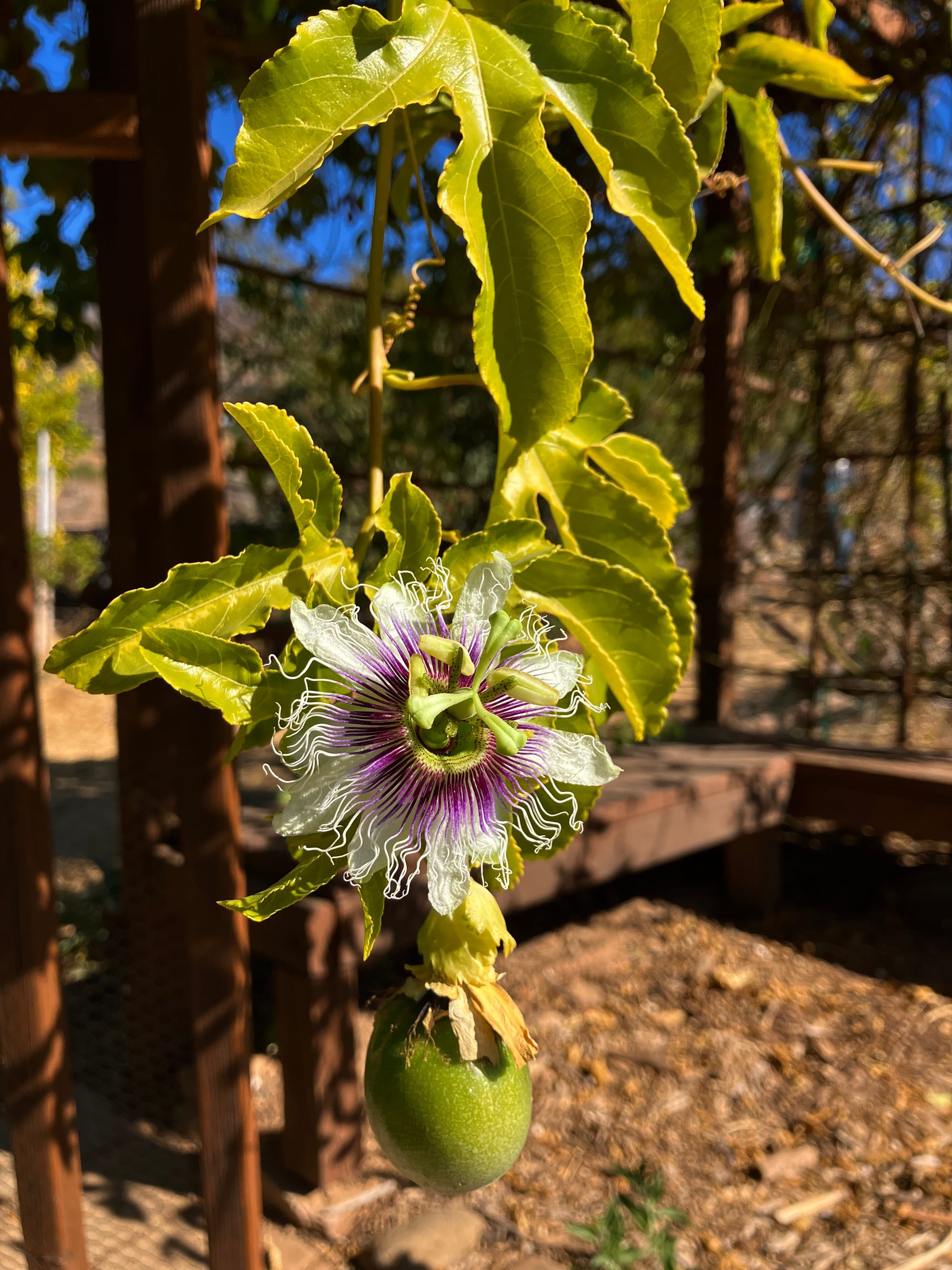
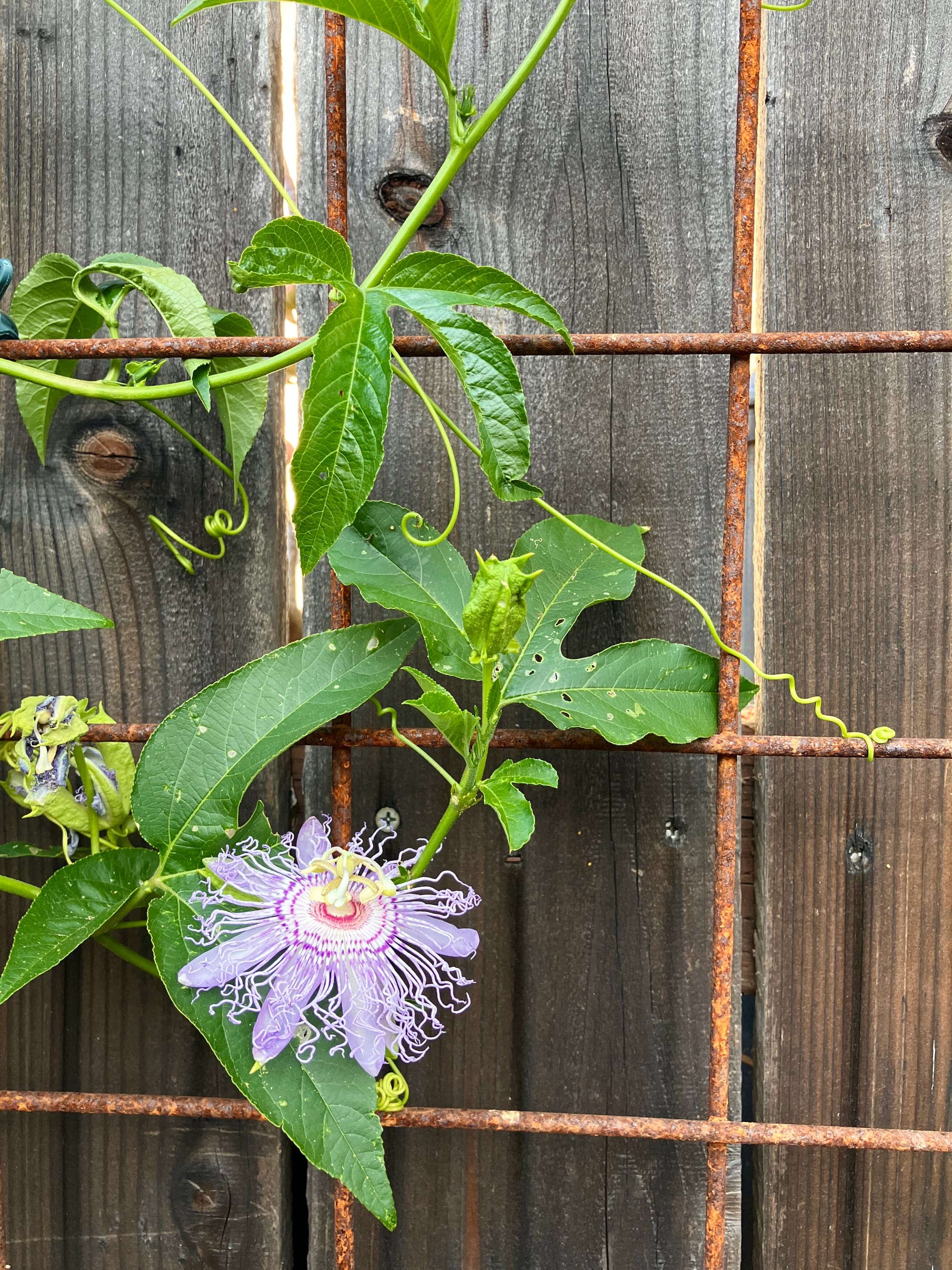
Passiflora edulus (white flowers), Passiflora incarnata (purple flowers).
This gal is a stunner. Deep green leaves, curly tendrils and otherworldly flowers. She's native to Central and South America, but it was Spanish colonizers who gave it its Biblical name; they thought it resembled the 10 apostles (5 petals + 5 sepals) and Jesus’ crown of thorns. Other parts of the world think the flower looks like the face of a clock. In Japan, many call it “clock plant.”
In the US, you’ll find her in the southeast, which means she loves humidity and moisture while growing in sun, shade or partial shade. But this vine grows quite well in California, even in my dry inland region. That’s probably because at least in my yard, she gets regular watering, is in mostly shade, and the winters aren’t extreme.
Growing the vine has been equal parts joy and chaos. A joy because it’s lent green abundance to a musty fence and blank stucco wall. Chaotic because gulf fritillary caterpillars are eating the leaves with gusto. The way Monarch caterpillars eat milkweed, gulf fritillary caterpillars eat passionflower pretty much exclusively. It’s their food, and I can respect that, but damn, leave some for me.
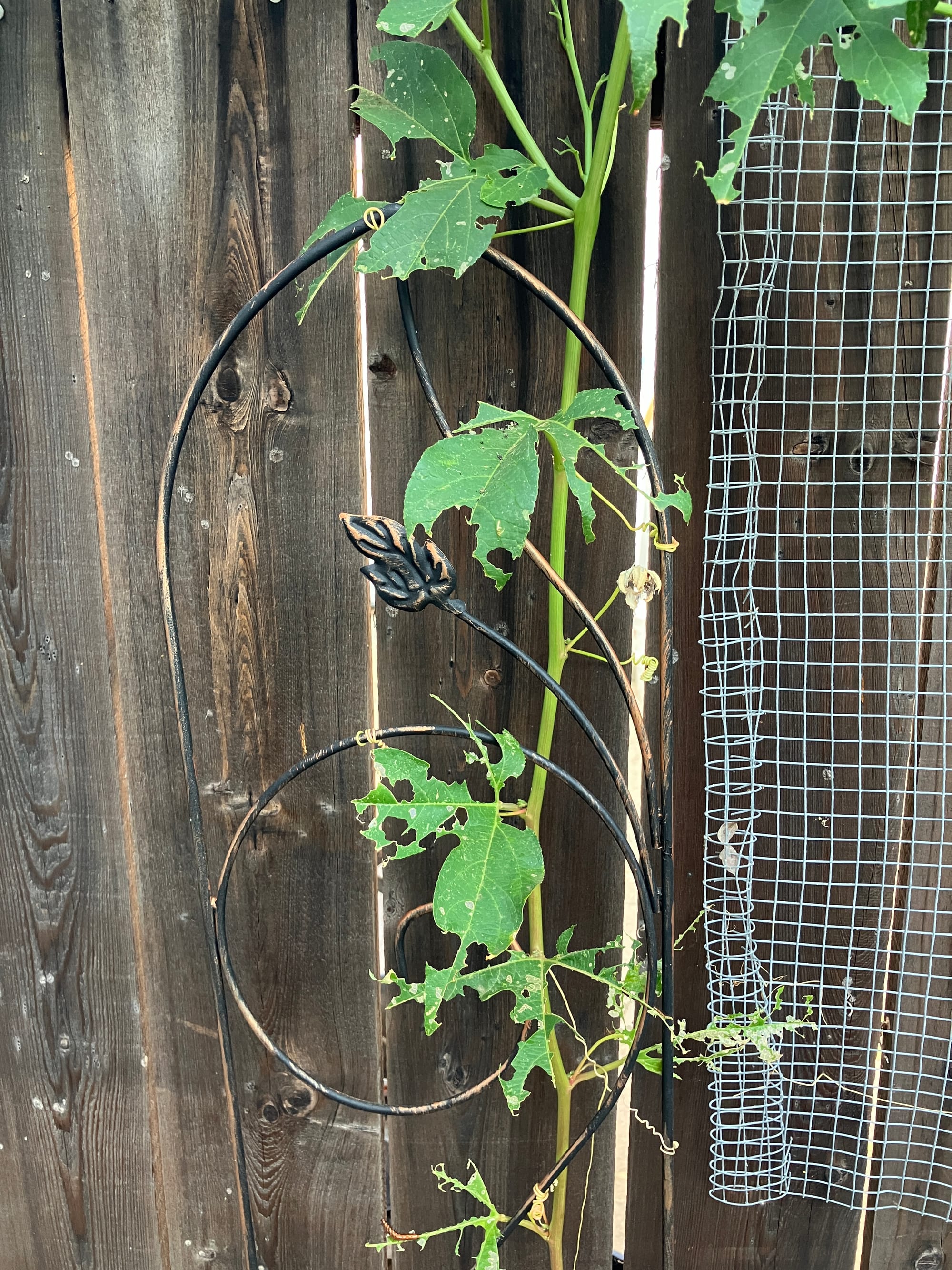
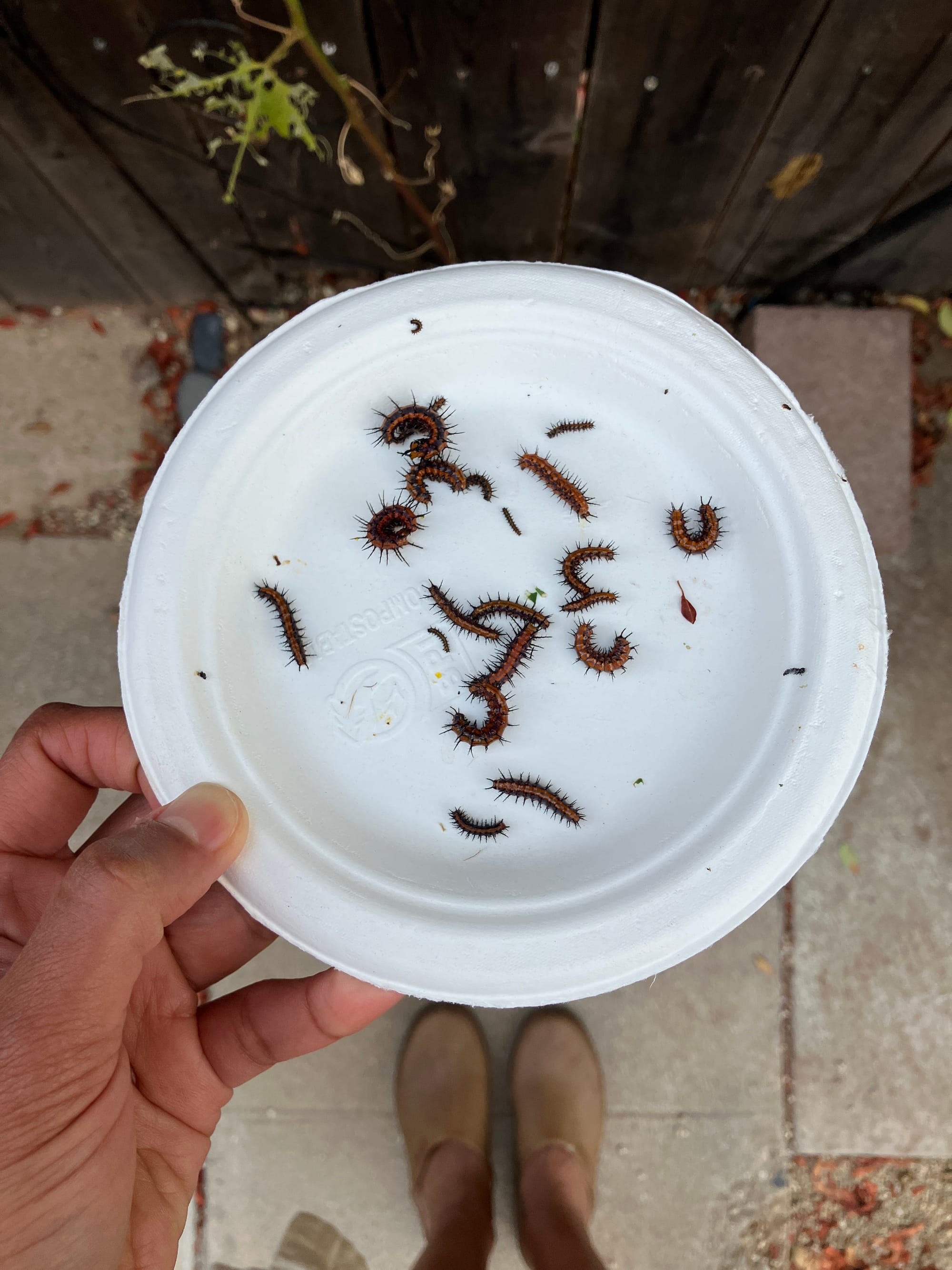
The damage, the perpetrators.
Passionflower grows incredibly fast with the help of tendrils, thin stems that grab onto fences, pergolas, other plants and even their own leaves. Like those of peas or cucumbers, tendrils provide structure, support and some height advantage for resources. Sometimes in spot where a tendril has nothing to hold onto, it’ll just coil mid-air. It’s pretty magical.
Regardless of whether you believe in the doctrine of signatures—the ancient theory that certain plants resemble the organ or body part they can heal—there is something poetic about how tight the tendrils coil and how much it can help us release.
Passionflower is a nervine, a category of herbs that support, nourish and eliminate stress on the nervous system. She is cooling, relaxing, relieving, anti-spasmodic, slightly sedating and can promote sleep. In her book Energetic Herbalism, Kat Meier describes passionflower as an herb for constriction—tension headaches, holding onto emotions, feeling burned out or insomnia.
A word from the herbalist (me): Every herb isn't for every body. If you're pregnant, have low blood pressure, or take prescription sedatives, antispasmodics or MAOIs, many herbalists advise against passionflower. Some kids 4 and under can get overexcited when taking passionflower in large doses.
This past summer, my work took on a new level of "busy," and my dog had a health scare. I was overworked and exhausted. And you know how it goes—left unchecked, what’s emotional often becomes physical.

I was clenching my teeth more, waking up at 3 a.m. with coulda-woulda-shoulda's on loop, suffering from aggravated PMS symptoms and crying on a dime. I felt like those tendrils. I was so wound up and wanted to turn down the volume on my interior monologue.
Peter Holmes, in his book, The Energetics of Western Herbs, calls Passiflora incarnata a “cerebral decongestant.” Lucy Jones in A Working Herbal Dispensary, says, “[Passionflower] helps us distance ourselves from our day-to-day concerns, allowing churning repetitive worries to loosen their grip on us, making it easier for us to relax and to sleep more soundly.”
Or as Meredith Marks, esq. might say:

When I’m traveling, I usually pack a bottle of passionflower extract as a just-in-case. But this summer, I was home and needed a grounding ritual to get me out of my head. So I would make this tea. Passionflower leaves, stems and flowers (the "aerial" parts) benefit from a long steep, about one hour to extract the many flavonoids, constituents that have lovely antioxidant and anti-inflammatory properties.
The m.o. for an infusion of Passiflora incarnata is 1–2 teaspoons of dried herb per cup of water. Here’s a recipe I leaned on in recent months:
- 1 tsp Passionflower (Passiflora incarnata)
- ½ tsp Linden flower (Tillia spp.)
- ½ tsp Hawthorn berries, ground in a spice mill (Crataegus spp.)
Combine all herbs in a tea bag or strainer. Steep in 8 oz. of hot water, covered, for 1 hour. Strain and enjoy.
The tricky thing about many nervous system-supporting herbs is that they’re energetically drying. If you run damp (you're often bloated, sluggish, never thirsty), maybe this is fine for you. But if you’re like me and you’re always reaching for water, hand cream and/or lip balm, then you’ll probably want a moistening element in your tea, too. Linden can be great for that.
Hawthorn meanwhile is a trophorestorative herb for the heart. (Trophos are herbs that nourish and help build a specific organ or tissue). During this chapter of stress, in addition to my mind feeling constricted, so did my heart.
All in all, the equation looks like:
- Passionflower: Dry, cool, slightly bitter
- Linden flower: Moist, cool, sweet
- Hawthorn berry: Slightly warm, sour, sweet
A nice mix of cool and warm, bitter, sweet and sour. Just how I like my tea. Just how I like my Housewives. You can also just carry passionflower and soak up its magic. As Scott Cunningham says in his book Encyclopedia of Magical Herbs: "It attracts friends and great popularity."