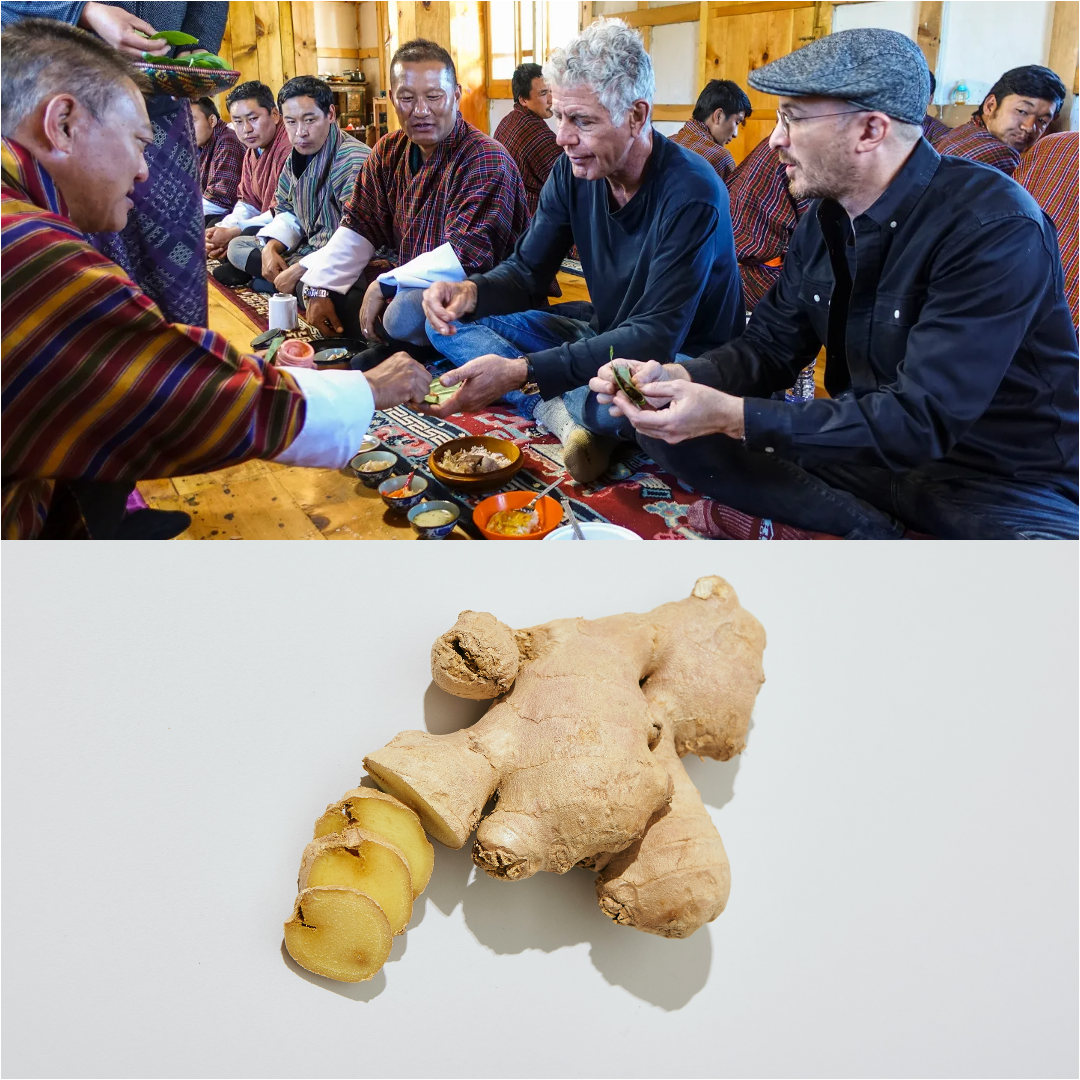
“The extent at which you can see how other people live seems useful at worst and incredibly pleasurable and interesting at best.”—Anthony Bourdain, No Reservations
There’s no other way to start a piece about Bourdain than to start with his words. He was a chef, yes—most notably at New York’s Brasserie Les Halles—but he was also an exceptional writer. Also curious. Also a curmudgeon. Also kind.
All of that came together first in his book, Kitchen Confidential. TV was next with his first series, A Cook’s Tour, which aired on The Food Network from 2002 to 2003. (The logline read: Bad-boy chef and author Anthony Bourdain goes off the beaten track in search of foods that are rare, highly esteemed and sometimes downright dangerous.)
Things got less schtick-y when he went on to host his Travel Channel series No Reservations, which ran for eight seasons and sent the peripatetic chef and writer all over the world to break bread/naan/injera/pita/tortillas with locals. But Bourdain always chewed on much more than food. A meal was his gateway to understanding politics, art, music, history and the pain slash beauty of being human.
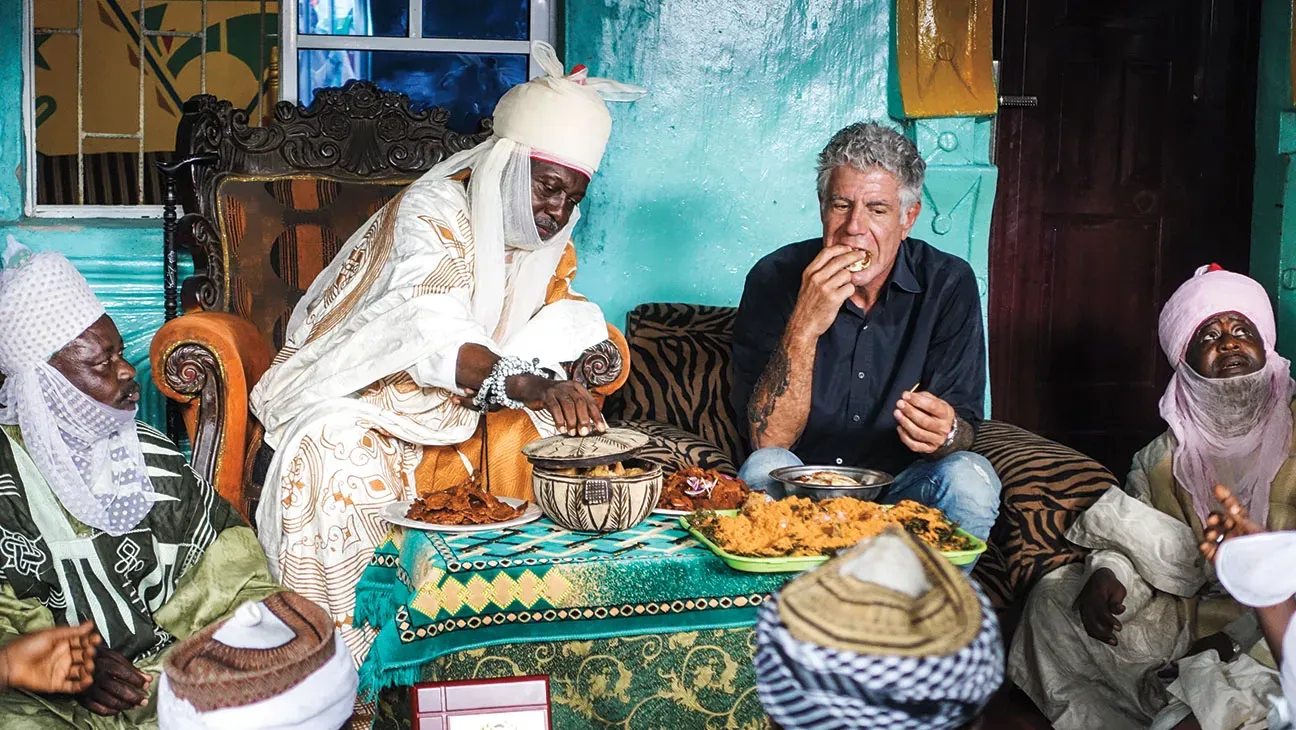
When he wanted more creative freedom and license to go to destinations the Travel Channel wouldn’t or couldn’t, he moved over to CNN, where the network had “the infrastructure and inclination.” Parts Unknown had a similar recipe to No Reservations—get to know a place through the hearts, minds and kitchens of locals—but on CNN, Bourdain could also tell stories about Iran, Congo, Myanmar and Libya, places where the narrative is often imposed on the people, not told from their point of view.
Yes, Parts Unknown was still a white American man telling the story of another community—which begs the question for another time, who gets to tell the stories?—but I believe Bourdain did it differently. He was humble, respectful and gave the platform to the locals. Nothing was “weird” or “other.” (When I once interviewed him about the craziest thing he’s ever eaten, just to see where my bait might lead him, he responded, “McDonald’s chicken nuggets.”)
He wasn’t afraid to shatter the veneer of “travel show.” During a boat excursion to catch octopus in the Sicily episode, Bourdain spots an already-dead, half-frozen, store-bought octopus chucked into the water. This was the kind of travel show fakery Bourdain hated. In fact, he told us just how drunk he got after the fact because the stunt depressed him so.
As his longtime producer Tom Vitale describes in In the Weeds, Bourdain was a medley of contradictions. A hardass but a softie. Rude but fiercely loyal. Gregarious but shy and insecure. That tangled personality came through in Bourdain's introspective narration. (His narration is reason alone to watch Parts Unknown—all episodes are streaming on HBO Max. Eater would recap each installment via the episode's best one-liners.)
Upon tasting a homemade courgettes agrodolce, a classic bittersweet dish, in that same Sicily episode, Bourdain said:
“If you talk about Italy as a whole, it is the most interesting aspect of Italian cuisine, not just gastronomically but philosophically. Because it is a philosophical thing. Life is too good. I need a little bitterness to remind myself of the eternal tragedy of our existence.”
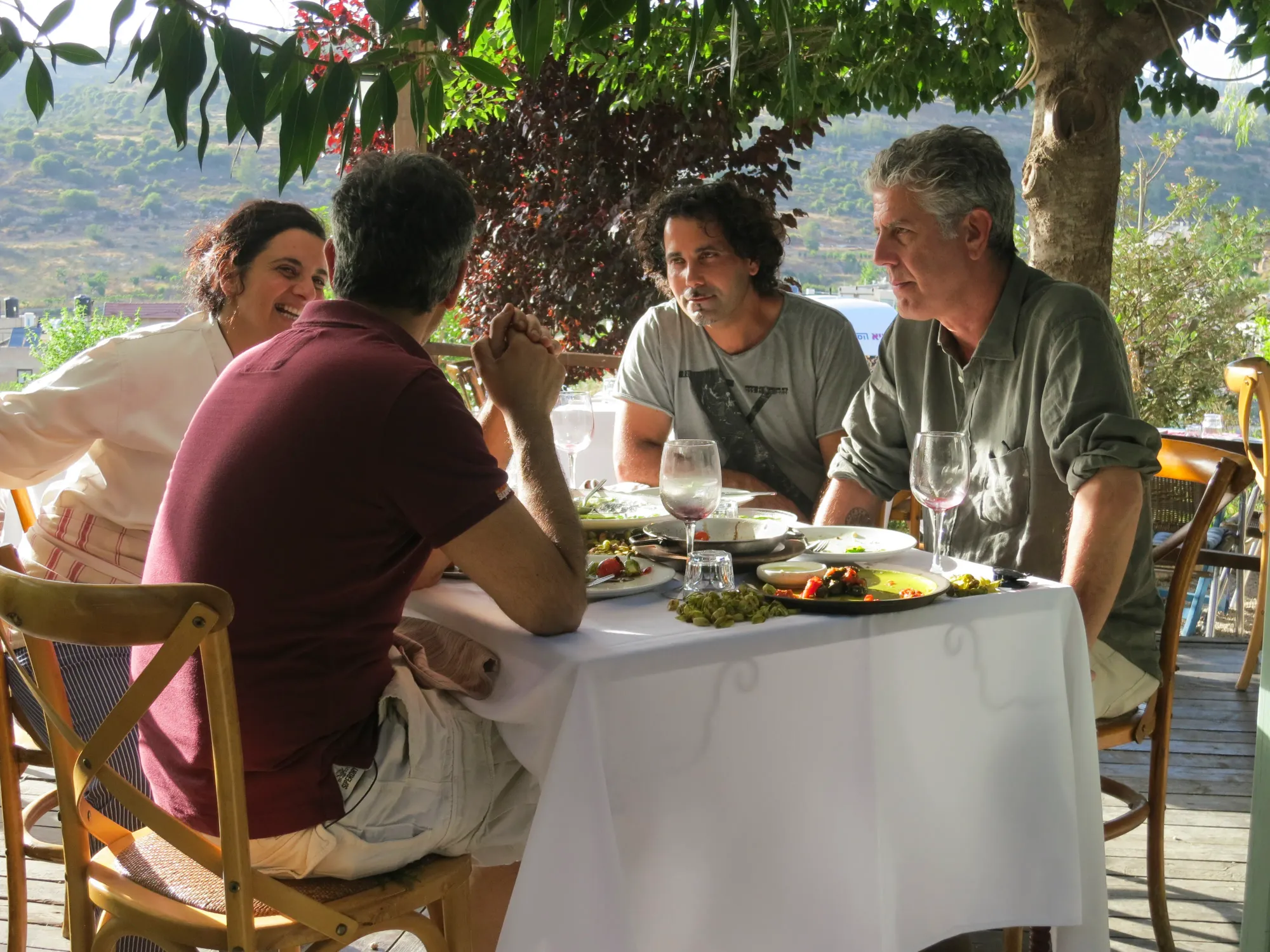
One of his more heart-twisting episodes is his 2012 visit to Jerusalem, Gaza and the West Bank, all the more gutting given where we are today. Bourdain dined with settlers and refugees and wasn’t shy to point out hypocrisies, injustices and colonizer mentalities. Bourdain synthesized it all in a way many still can't today. In fact, in 2023, Salon.com posted a piece titled, "Nobody knows how to discuss the Israeli-Palestinian conflict. In 2013, Anthony Bourdain did."
There was no pretense or platitudes. He called out his preconceived notions and being out of his comfort zone. In the Jerusalem episode, it’s one of the rare times he enjoys a vegetarian meal, at a now-shuttered restaurant called Majda that blended the tastes and backgrounds of a Muslim man and his Jewish wife. “It is incredibly beautiful here,” Bourdain said in his voiceover. “I don’t know why I didn’t expect that.”
Or in Iran: “I am so confused. It wasn’t supposed to be like this—of all the places, of all the countries, all the years of traveling, it’s here, in Iran, that I am greeted most warmly by total strangers.”
Or in West Virginia: "To think about, much less empathize with, somebody who comes from five generations of coal miners in a place that looks like this is, to our enduring shame, unthinkable. Why can't these coal miners get retrained, maybe put up solar panels for a living? Why would these conservative, deeply religious people vote for a thrice married billionaire New Yorker? Well, I went to West Virginia and you know what? Screw you."
Bourdain taught us to move. Because the more we see, the more we try and the more new people we talk to, the more we can try to bridge the deep, dangerous, self-imposed chasms we form between one another. He said it best in his Vietnam episode, that one where he dined on bun cha with Obama in Hanoi:
“I used to have a pretty dim view of humanity,” he said. “But since I started traveling, particularly to places where I anticipated being treated badly, I am on balance pretty convinced that generally speaking the human race are doing the best they can to be as good as they can, under the circumstances, whatever they may be.”
Bourdain died of suicide on June 8, 2018. As Vitale says, he reached iconic, near-sainthood status posthumously. I think it’s because he was totally human, which means flawed. His honesty, openness and even his pessimism taught us a lot about how we should move through this world. He was a complicated dude but an exemplary one, too.
“If I'm an advocate for anything, it’s to move,” he said on the final episode of No Reservations. “As far as you can, as much as you can. Across the ocean, or simply across the river. Walk in someone else's shoes or at least eat their food. It's a plus for everybody.”

Many of us are about to get on the move, for Thanksgiving, the December holidays, new year’s trips. Bourdain might’ve gone to Cuba and you might be going to your aunt’s dinner table, but his principles still apply. Listen. Be kind. Ask questions. Eat as the locals do.
Bourdain would have "fixers" for each episode, locals who would help with logistics, planning and problems. In the plant world, ginger is like an internal fixer. A warm, grounding root culinary herb that keeps things moving. And in a season that's heavy on eating, immune assaults and travel (and sitting), it's a great to time grab this very accessible herb.

Native to Southeast Asia, Zingiber officinalis is an anti-inflammatory powerhouse that helps:
- alleviate gas, bloating, constipation and nausea
- quell menstrual cramps
- increase circulation (also to the pelvic area, to encourage delayed menses)
- reduce fevers
- flush out mucus
- warm the body
Chilly hands and feet? Ginger. Motion sickness? Ginger. Overdid it on your mom’s mac ‘n cheese? Ginger. Starting to feel a tickle in your throat? Ginger. Joint inflammation? Ginger. (Per the doctrine of signatures, you’ll see that a piece of ginger kind of looks like a hand.)
In herbalism, ginger is also often added, even in small amounts, to herbal formulas to help the other herbs move and groove through the body.
This doesn’t mean ginger is for everyone. It's warm/hot, sweet and pungent. If you’re always feeling toasty, dry and/or thirsty, ginger might be too extra for you, resulting in indigestion, reflux or overall irritation to your body. Excessive consumption of dried ginger could irritate stomach lining, and if you have hyperchlorhydria, herbalist David Winston says to just plain avoid it. It also has a very mild antiplatelet effect, which is generally temporary; it shouldn't interact with blood-thinners or increase any bleeding associated with surgery.
Why not just buy some powdered ginger and keep it easy? First of all, who knows how long that grocery store spice shaker has sat on the shelf. Second of all, there’s nuance between fresh and dried ginger.
Fresh ginger root is more warm than hot and disperses heat to extremities. For this, I like to simmer 1-2 fresh slices (skin on) in 8 oz. of water on the stove for 10 minutes, strain and sip. Or infuse ½ to 1 teaspoon of grated fresh ginger in a tea bag or strainer, covered, for 10 minutes.
Dried ginger root, on the other hand, is energetically hot. It does a great job heating your center. You can infuse ¼ to ½ teaspoon of dried ginger in 8 oz. of water in a tea bag or strainer, covered, for 10-30 minutes. That cover is key so you retain the beneficial volatile oils, like gingerol, shogaol and zingiberene.
I hated ginger for so many years—it made me queasy, which is oddly the symptom it's supposed to solve for—but a few years ago, my taste buds changed and I accepted the fact that it’s the one-stop kitchen medicine shop I need for my headaches, cramps, joint inflammation and sensitive stomach. What helped convert me was using fresh grated ginger in my meals. Like in Alison Roman’s chickpea stew. It made such a difference in flavor.
But by far my favorite way to use fresh ginger is in fire cider—a tart, sour, spicy, subtly sweet tonic that warms the body, supports immunity and gets circulation going. I make big batches of it during this season of sickness, travel and everything feeling in overdrive.
Fire cider is very much a folk remedy, with personal variations, from eyeballing measurements and subbing ingredients to the way it's consumed. I drink a diluted tablespoon every day in the fall and winter. (It's zingy, you've been warned.) You can also just add it to a bowl of soup or drizzle it on stir-fry. Like ginger, fire cider isn’t necessarily for everyone, especially if you have ulcers, tend toward heartburn or have an irritated gut lining.
But if you’re in the clear, it’s a fun way to get in the kitchen, get to know the medicinal benefits of accessible ingredients and protect your immune reservoir. There are many versions—this book has 101 of them—but this one below from Mountain Rose Herbs is my go-to.
FIRE CIDER
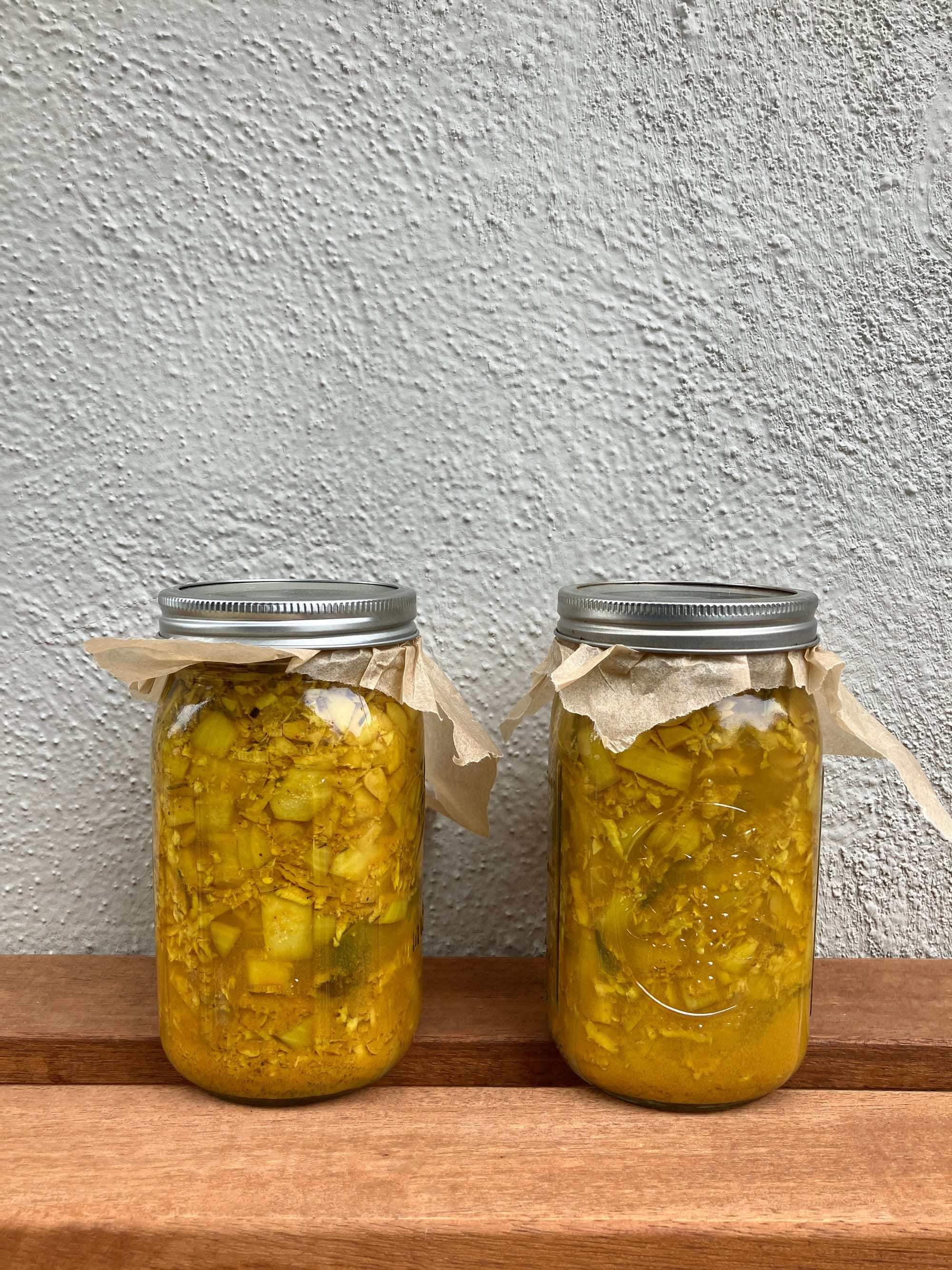
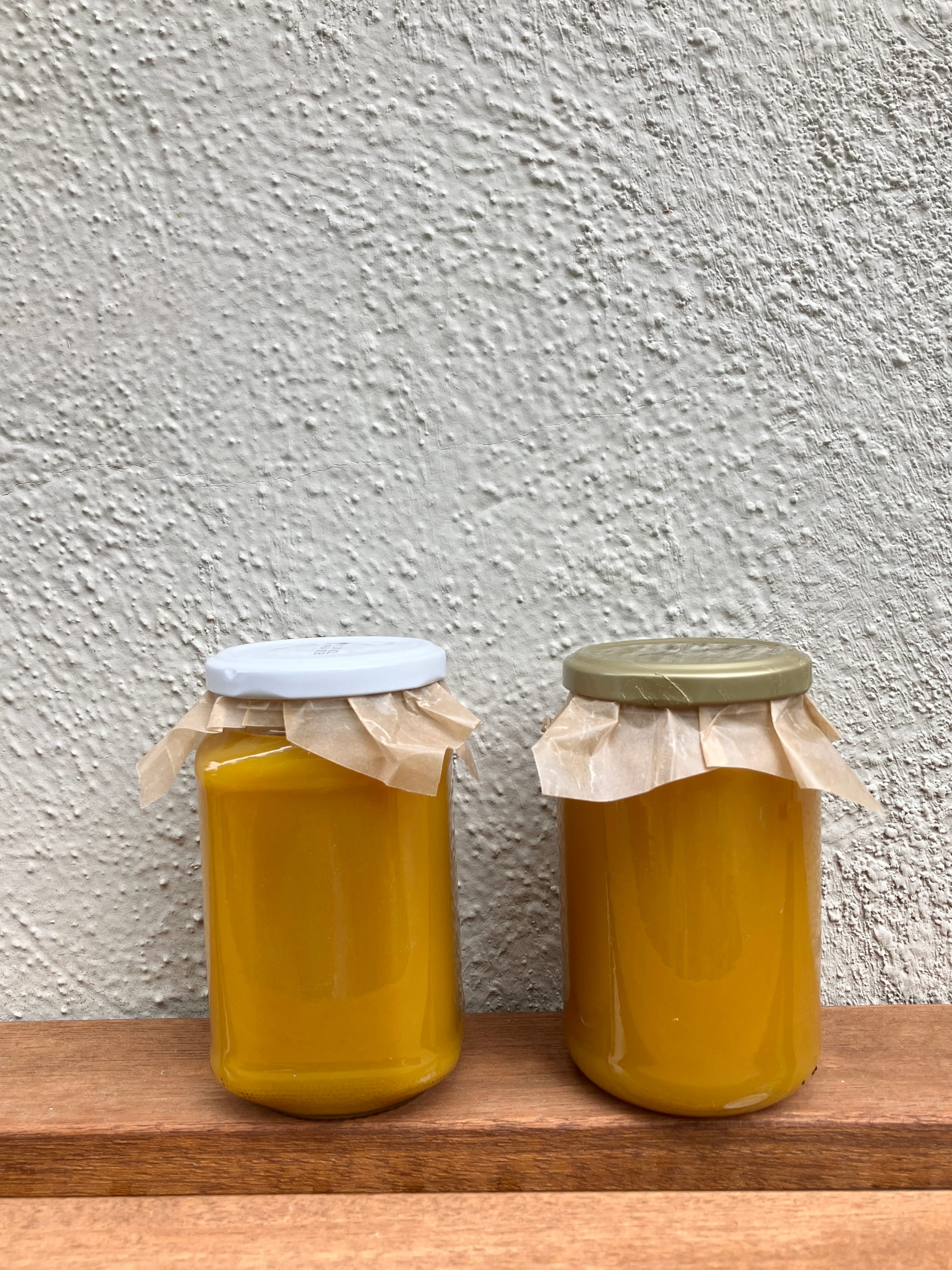
Left: Six-ish weeks of the ingredients marinating, giving it a shake daily. Right: Strained, honey added and ready for cold and flu season
Ingredients
- 1 medium organic onion, chopped
- 10 cloves of organic garlic, crushed or chopped
- 2 organic jalapeno peppers, chopped
- Zest and juice from 1 organic lemon
- 1/2 cup fresh grated organic ginger root
- 1/2 cup fresh grated organic horseradish root
- 1 Tbsp. organic turmeric powder
- 1/4 tsp. organic cayenne powder
- 2 Tbsp. of dried rosemary leaves
- Organic apple cider vinegar
- 1/4 cup of raw, local honey, or to taste
Directions
- Prepare your roots, fruits, and herbs and place them in a quart-sized glass jar. If you've never grated fresh horseradish, be prepared for a powerful sinus-opening experience.
- Pour the apple cider vinegar in the jar until all of the ingredients are covered and the vinegar reaches the jar's top.
- Use a piece of natural parchment or wax paper under the lid to keep the vinegar from touching the metal, or a plastic lid if you have one. Shake well.
- Store in a dark, cool place for a month and remember to shake daily.
- After one month, use cheesecloth to strain out the pulp, pouring the vinegar into a clean jar. Be sure to squeeze as much of the liquidy goodness as you can from the pulp while straining.
- Next comes the honey. Add and stir until incorporated.
- Taste your cider and add more honey until you reach the desired sweetness. Use a new piece of parchment or wax paper under the lid.
- Compost the leftover plant material or, if you're brave, use it in a soup of stew.
Sources
Ayustaningwarno F, Anjani G, Ayu AM, Fogliano V. A critical review of Ginger's (Zingiber officinale) antioxidant, anti-inflammatory, and immunomodulatory activities. Front Nutr. 2024 Jun 6;11:1364836. doi: 10.3389/fnut.2024.1364836. PMID: 38903613; PMCID: PMC11187345.
Gladstar, Rosemary. Fire Cider! Storey Publishing, LLC, 15 Oct. 2019.
Gladstar, Rosemary. Rosemary Gladstar’s Medicinal Herbs: A Beginner’s Guide. North Adams, Ma, Storey Publishing, 2012.
Jones, Lucy. A Working Herbal Dispensary. Aeon Books, 30 May 2023.
Kawaoka, Becca. 2025, January 6. All Things Ginger! [Audio podcast episode]. In The Active Herbalist.
Mao QQ, Xu XY, Cao SY, Gan RY, Corke H, Beta T, Li HB. Bioactive Compounds and Bioactivities of Ginger (Zingiber officinale Roscoe). Foods. 2019 May 30;8(6):185. doi: 10.3390/foods8060185. PMID: 31151279; PMCID: PMC6616534.
Soule, Deb, and Susan Szwed. The Woman’s Handbook of Healing Herbs. Simon and Schuster, 1 Aug. 2011.
Swift, Katja, Midura, Ryn.. 2024, February 2. Herbs A-Z: Zingiber. [Audio podcast episode] In The Holistic Herbalism Podcast
Vitale, Tom. In the Weeds. Hachette Books, 2021.
Winston, David. Herbal Therapeutics: Specific Indications for Herbs & Herbal Formulas. Herbal Therapeutics Research Library, 2013.
Wood, Matthew. The Earthwise Herbal, Volume 1 : A Complete Guide to Old World Medicinal Plants. Berkeley, Calif., North Atlantic Books, 2008.