I can’t tell if I was born in the best era or the most challenging one. By that I mean, a millennial who was raised analog but grew up digital. I did have the internet, but 1.) it required dial-up [cue: screeching, cacophonous sound] and 2.) I used it mostly for Yahoo Mail and AskJeeves. (Was not cool enough to have AOL.) In college, we took notes in notebooks, not a laptop in sight. Apple didn’t launch its iPhone until 2007, the year I graduated from college, and even then it was a few years before I got one for myself. Instagram? Nope, not a thing until 2010.
At the same time, me and my fellow elder millennials—sometimes dubbed “digital natives”—are remarkably nimble when it comes to technology. We had to be. As quickly as technology pivoted, so did we. We swished from floppy disks and desktop computers to laptops, smartphones, the Cloud, ApplePay and AI.
Yes, other generations can claim analog childhoods (and adulthoods for that matter), but they don't walk this analog-digital tightrope the way we do. That one-foot-in-one-foot-out feeling has its drawbacks, but it also comes with perks. I can read paper maps and also appreciate the ease of Google Maps. I know what it’s like to not know how a photo looks until I get it printed and also know the joy of endless angles, filters and the delete button on my iPhone camera. I also know what it was like to experience the peak of MTV in the ‘90s and now write about MTV (R.I.P.) on a digital platform today.

On December 31, 2025, MTV’s parent company, Paramount, announced it would shutter all of its remaining 24-hour music channels. Reality shows will remain, but MTV as we knew it, is over.
In the ‘90s and a smidge of the early aughts, I was well-fed: Total Request Live, Making the Video, MTV Unplugged, MTV News, The Real World, Road Rules, Singled Out and House of Style. (Cribs, Super Sweet 16 and The Jersey Shore came later). At that time, MTV was the arbiter of what was cool and new. It was the breeding ground for countless iconic pop culture moments. Nirvana Unplugged. The Backstreet Boys’ “I’ll Never Break Your Heart” premiering on TRL. Whitney and Mariah’s 1998 face-off at the VMAs.
“For 10 to 20 years minimum, MTV was the monoculture for youth culture,” explains Craig Marks, co-author of I Want My MTV: The Uncensored Story of the Music Video Revolution. “It's where everyone went to celebrate music. It created an art form, music video, that hadn't existed before. And it was so significant in not just music culture, but fashion, culture, film, television.”
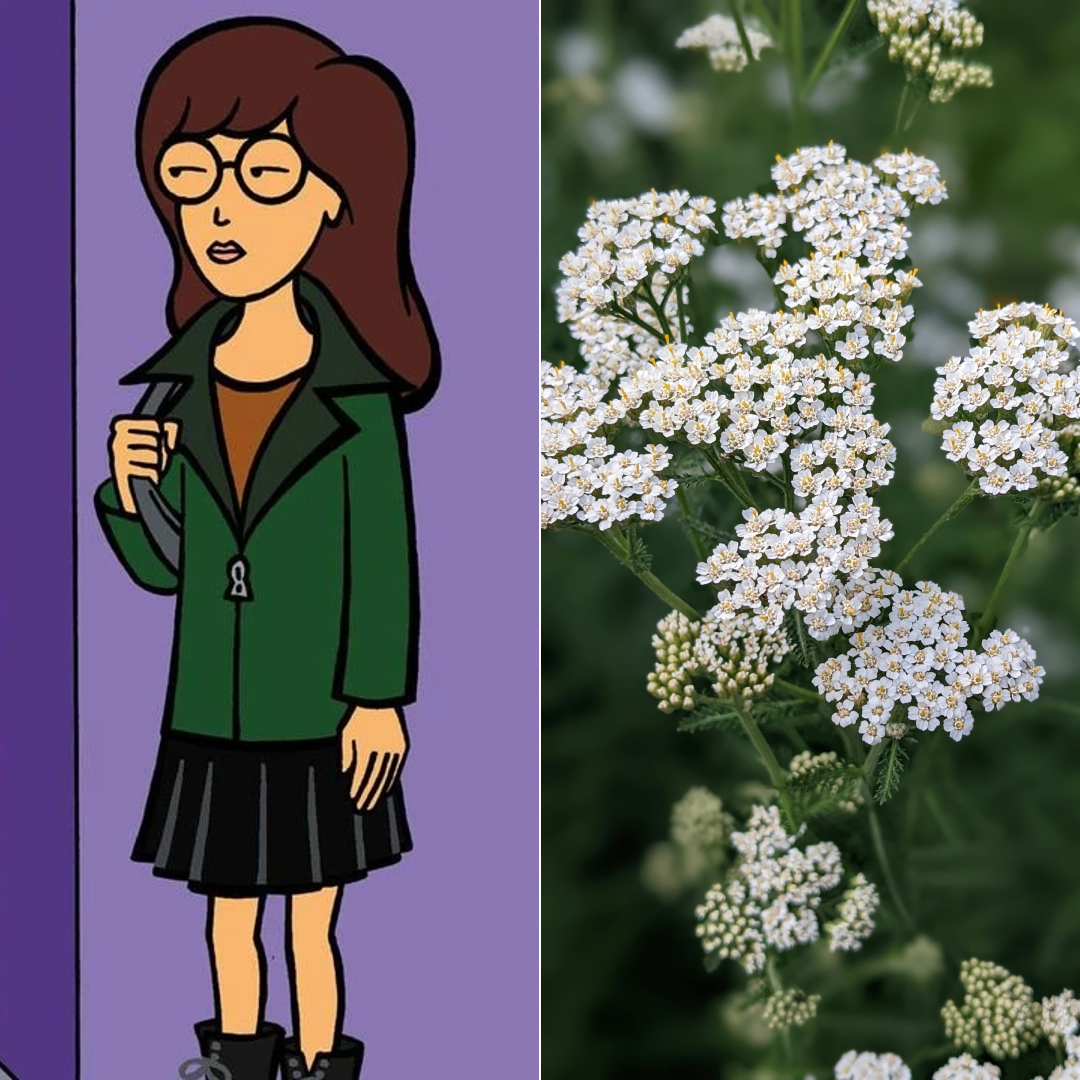
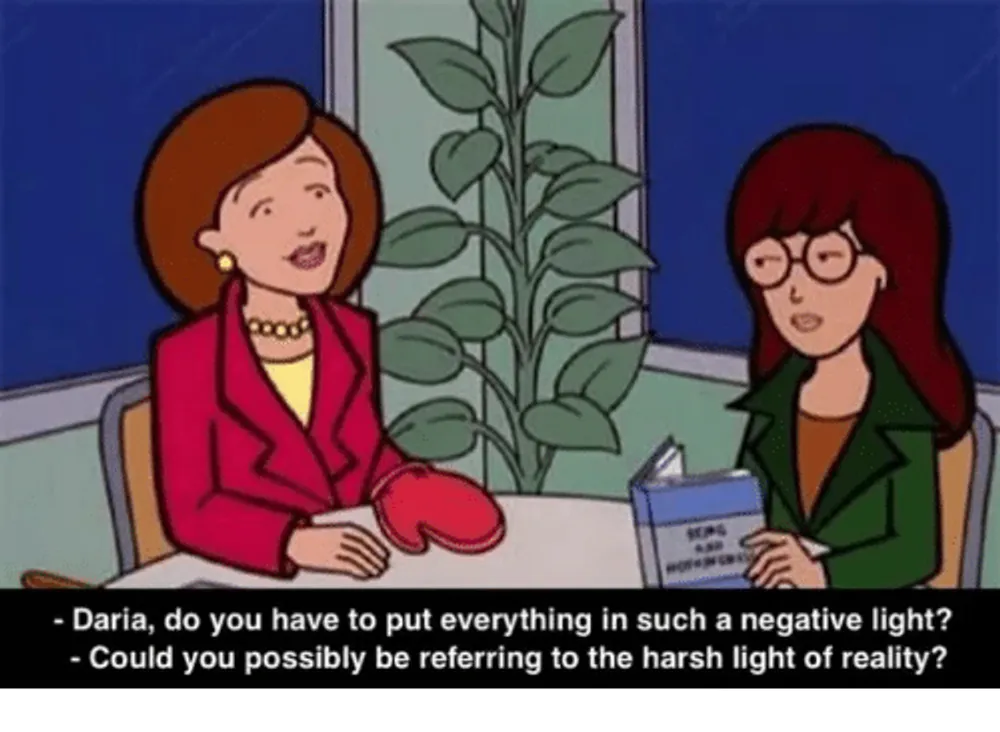
Yes, there was so much more to MTV than music. Before the network went all in on reality TV, it had a robust lineup of scripted series. Most of them were…not good. But one of them remains one of my favorite TV shows of all time: Daria, the animated series that follows a whipsmart, sarcastic teen forced to live amongst mostly nitwits.
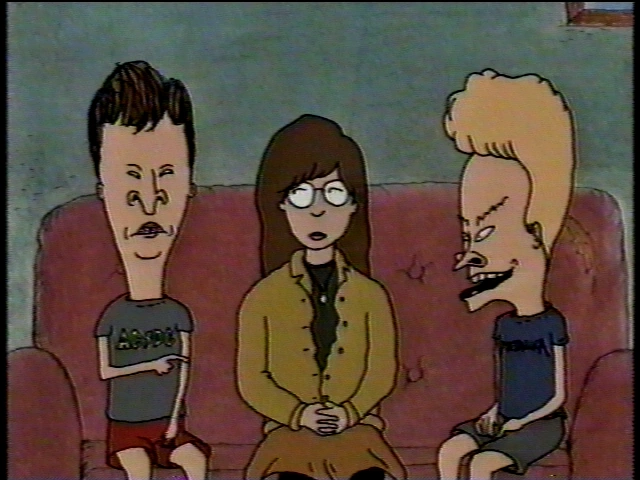
The titular character first appeared on Beavis and Butthead in 1994. When MTV realized it needed to widen its demographic to include, you know, women, they spun this supporting character off into her own show.
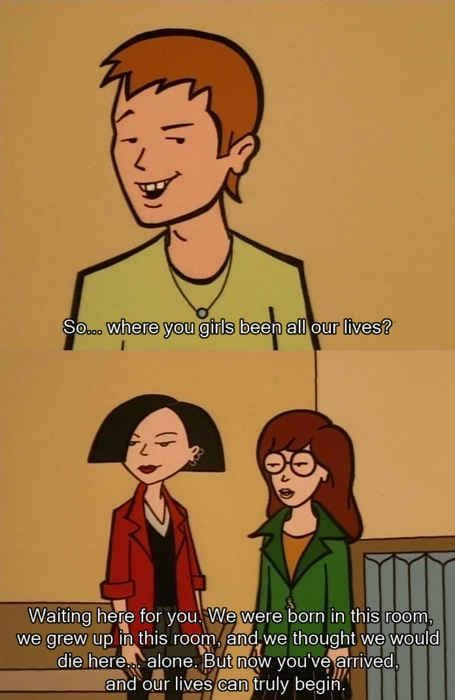
Daria's five-season run began in March 1997. It premieres with Daria and her family moving to the fictional, prototypical suburban town of Lawndale. Her vapid, appearance-obsessed sister Quinn quickly fits in with the popular kids. Daria, who is much too smart and self-aware for her own good, makes friends with another outcast, Jane Lane.
The high school setting lends itself to some cool kid vs. outcast storylines on the surface, but at its core, Daria is about an outspoken woman and her biting commentary on a culture that prizes looks, social status and status quo. Mind you, when Daria debuted, it was the era of frothy pop. As much as the Britney Spears “I’m a Slave 4 You” VMA performance is delightfully burned in my brain, Daria’s cynicism helped even out the MTV playing field.
Instead of the typical high school show fodder, the scripts instead tackle capitalism, gender dynamics and race. Take Jodie and Mack, two students at Lawndale High who are smart, savvy and able to deal with the town idiots without going full hater the way Daria does. Jodie and Mack are also black, but as writer and comedian Phoebe Robsinon points out, the show doesn't make their race their whole identity. At the same time, by including Jodie—albeit not enough—the writers dive into meaty dialogue about race that Saved By the Bell and California Dreams wouldn't dare touch.
“A show in the ‘90s was able to understand that even though Jodie and Daria are similar in a lot of ways,” Robinson writes, “they are different because of race, and as a result, Jodie has a much different view of the world, and the world has a much different view of her. That...is the intersectionality experience, and the fact that Daria got it was certainly not expected at the time.”
But Daria the character isn't perfect. For one, she poaches her best friend's boyfriend in season 4. On a more macro level, her sarcasm is a mask for something quite sad. Jodie sums it up best: "You realize your negative approach to everything is self-defeating, right?" Self-defeating, yes. But she's self-aware, too. As she says, "I'm so defensive, I actively work to make people dislike me so I won't feel bad when they do."
This mask makes some cast her off as a sardonic, monotone misanthrope. But when I rewatch Daria—all seasons are available on Paramount’s streaming service—I see an individualist, a feminist and someone who understood the word “boundary” long before it got hijacked from therapy sessions and plugged into our everyday vocabulary.
Fun fact: Some accounts say “sardonic” gets its name from a toxic plant native to Sardinia. Jury’s out on which plant exactly, but RadioLab thinks it may be march, crowfoot, buttercup, or wild parsley (Ranunculus sceleratus). Apparently if you ate this plant, your face would crumple into a horrifying laugh-smile as you perished. Funny or and die, indeed.
No matter how dumb, aloof or stuck in their ways the people around her were, Daria changes for no one. Certainly not when an English teacher makes her take a self-esteem workshop. (As she tells her parents later that night: "I don't have low self-esteem. I have low esteem for everyone else.”) She puts up with the dummies around her, but she never budges to meet their conventions. As The New York Times wrote about her in 2000, Daria “says things that most people just think.”
Nearly 30 years after its premiere, we’re plagued even more by the veneer of reality that had irked Daria so. That’s why this criminally under-watched show still has relevance today. As Arielle Bernstein said in 2017: “Daria’s insistence on not giving in to the cult of appearances seems particularly relevant today, in a world where ‘building your brand’ is more important than ever. At a time when people eagerly put themselves into various boxes, the insistence on individuality over groupthink is becoming more and more an act of resistance.”
As a kid, I loved Daria’s sarcasm. Now, as a 40-year-old, she is my boundary icon. Us people-pleasers need our tools for establishing boundaries. Sometimes I call on Daria. Other times, I call on yarrow.
Yarrow is a deciduous perennial plant that grows 2- to 3-feet-tall, spreads generously given full sun or partial shade, and has tufts of white flowers (called corymbs) and soft, feathery leaves, which is why some Native American communities call the plant “chipmunk tail.” Evidence of this plant dates back at least 50,000 years when a Neanderthal skull was unearthed with yarrow in its teeth (chamomile, too).

Its scientific name, Achillea millefolium, nods to Greek folklore. When the sea goddess Thetis dipped her son Achilles in a healing, protective bath of yarrow tea, she held him by his ankle. It’s the one area that didn’t get #blessed by yarrow. Which is where we get the metaphor that our Achilles’ heel is our most vulnerable spot. Yarrow has tons of amazing medicinal benefits—primarily as a wound-healer, more on that later—but I love working with yarrow for its energetic protection. More specifically, I think of it when I want to help protect my Achilles heel—a lack of boundaries.
Check out how yarrow is described in The Flower Essence Repertory:
“Those who typically need [yarrow] are easily affected by their surroundings…such individual personas have an extraordinary capacity for healing, counseling, or teaching, because they are readily able to receive psychic information and to understand the pain and suffering of others. At the same time they are easily depleted, and are quite vulnerable to the thoughts or negative intentions of others. Yarrow quite literally ‘knits together’ the overly porous aura, so that it does not ‘bleed’ so excessively into its environment. Yarrow bestows to the self a shining shield of Light which protects and unifies the essential Self.”

That little passage is what prompted me to buy this yarrow hydrosol and spritz it on me nearly every day in 2025. “[Yarrow] can be helpful for recognizing what is ours and what is not ours,” says Renée Camila in the “Herbal Highway” podcast. “Yarrow has a way of bringing you home to yourself.”
It helps ensure we don’t "bleed out" emotionally. And literally. Yarrow's flowers and leaves act as a vulnerary, or wound-healer. (Vulnerability…vulnerary…did you clock that?) The other etymology folklore is that Achilles would dole out yarrow to bleeding soldiers during the Trojan War. Today's modern-day warriors could benefit, too. “Hikers and rock climbers would do well to know about this herb,” says herbalist Richo Chech. Don’t leave for your backpacking trip without it, like in oil or salve form for your first aid kit.
But also, if you’re accident-prone like me, consider growing yarrow at home for quick access. When my husband frantically called me to the front yard to see a butterfly emerge from its chrysalis, I ran out, slid my sandals on, prompted slipped out of said sandals and scraped my big toe on the concrete in a big, bad way. I did see the butterfly emerge. I also bled a lot. So I mashed up some front yard yarrow and pressed it on the cut. The bleeding stopped. (Then I properly cleaned and bandaged the cut, natch.)
A word from the herbalist: Do not take yarrow if you’re pregnant, as it’s a uterine stimulant, or if going into surgery. Some people, like those allergic to ragweed, might develop rashes, due to yarrow’s sesquiterpine lactones. Long-term use may lead to skin photo-sensitivity.
If you think your smart device is intuitive, let me tell you about how smart yarrow is about blood. It can stop blood and encourage blood flow. In your body, it assesses the situation and acts accordingly. It asks, “What’s the distribution of blood and how do I need to sort things out?” Nosebleed? Stop bleeding. Cold hands and feet? Channel blood to the extremities. Varicose veins? Strengthen those arteries and veins so the blood gets moving. Late period? Bring it on. Yarrow's antispasmodic and anti-inflammatory qualities also make it a great support for menstrual cramps and other PMS symptoms.
Many herbalists recommend a cup of hot yarrow tea at the first sign of a cold or flu (1 tsp dried yarrow in 8 oz. of water, steeped covered for about 15 minutes; elderflower and peppermint are nice additions). The cooling, drying plant works by opening your pores and making you sweat to release heat in your body. Taste-wise, it’s also bitter, which means when you take yarrow before noshing, it helps stimulate bile, which helps us process fats and proteins.
Bitters are what make our digestion go ‘round. Consider yarrow if you've overindulged in hearty winter meals—or overindulged in how much you've let others invade your peace. Boundaries = personal power. Cheers to that.

Sources
Chevallier, A. (2023). Encyclopedia of Herbal Medicine. DK.
Cunningham, S. (1985). Encyclopedia of Magical Herbs. Llewellyn.
Camila Renée. 2024, November 12. Yarrow and Boundaries [Audio podcast episode]. The Herbal Highway
Cech, R., & Cech, S. (2016). Making Plant Medicine. Herbal Reads.
Hartung, T., & Holt, S. (2015). Homegrown Herbs: A Complete Guide to Growing, Using, and Enjoying More Than 100 herbs. Storey Publishing.
Holmes, P. (1989). The Energetics of Western Herbs: Volume 2: A Materia Medica Integrating Western and Chinese Herbal Therapeutics (Vol. 2). Snow Lotus Press.
Jones, Lucy. A Working Herbal Dispensary. Aeon Books, 30 May 2023.
Maier, K. (2022). Energetic Herbalism. Chelsea Green Publishing Co.
Nemeth E, Bernath J. Biological activities of yarrow species (Achillea spp.). Curr Pharm Des. 2008;14(29):3151-67. doi: 10.2174/138161208786404281. PMID: 19075697.
Shipley GP, Kindscher K. Evidence for the Paleoethnobotany of the Neanderthal: A Review of the Literature. Scientifica (Cairo). 2016;2016:8927654. doi: 10.1155/2016/8927654. Epub 2016 Oct 24. PMID: 27843675; PMCID: PMC5098096.
Soule, Deb, and Susan Szwed. The Woman’s Handbook of Healing Herbs. Simon and Schuster, 1 Aug. 2011.
Winston, David. Herbal Therapeutics: Specific Indications for Herbs & Herbal Formulas. Herbal Therapeutics Research Library, 2013.